

The most successful patio projects share one thing in common: they begin with thorough preparation and a skilled New England hardscaping team. More than flashy materials or following the latest trend, the groundwork you put in determines whether an investment performs beautifully in the long run.
Southern Maine presents regional challenges that make preparation especially important. Freeze–thaw cycles demand proper installation techniques. Coastal conditions require materials that can withstand salt air. Rocky ledge and varied terrain call for expertise that goes well beyond basic hardscaping knowledge.
The good news is, you don’t have to navigate this alone. At Stone Solutions we guide homeowners through each step, helping you make informed decisions that result in patios built for Maine winters. Understanding these nine steps helps you partner more effectively with your contractor.
Here’s what to know before the first stone is laid.
Step 1: Clarify Your Vision
Before reaching out to Maine hardscaping contractors or browsing materials, take time to consider what you truly want from your patio. We’re not talking about choosing bluestone versus granite just yet; this step is about understanding how you actually live.
Do you envision intimate dinner parties under string lights? A quiet spot for morning coffee? Or a space large enough to host extended family gatherings?
Location matters. Coastal properties must account for wind and salt exposure, while inland homes may contend with elevation changes or mature tree roots.
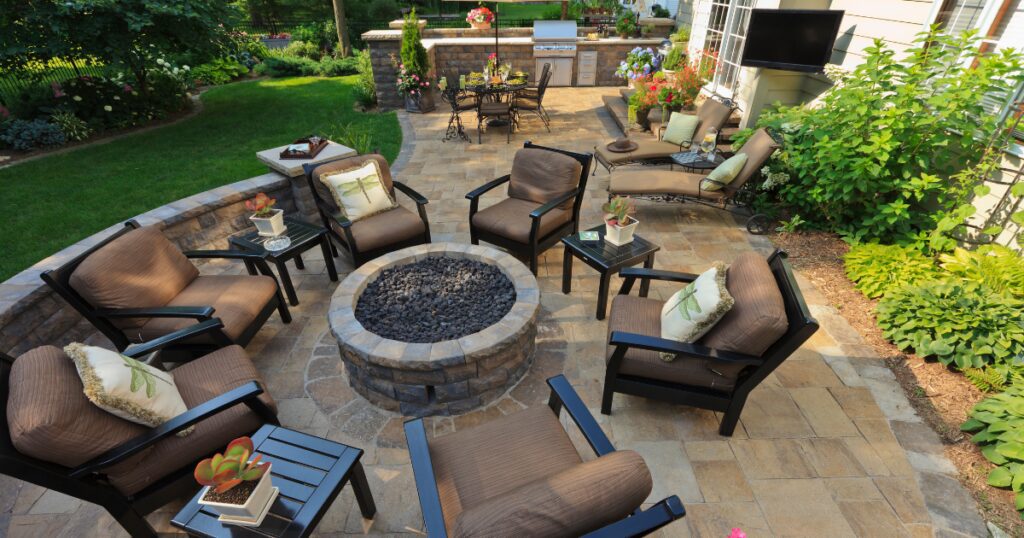
Consider your patio’s purpose. Do you envision any of the following?
- Entertaining space sized to your typical guest count
- Outdoor dining area with room for table and chairs
- Relaxation zone with flexible seating
- Transition space connecting home and yard
- Multi‑functional area that adapts to different uses
Measure your intended space and think through furniture placement. Sketch rough dimensions or use stakes and string to visualize the footprint in your yard.
Want help choosing materials that balance weather performance and long-term beauty? Read our guide on selecting the right patio material.
Step 2: Study Your Property
Properties in this area rarely cooperate easily. You may encounter ledges inches below the surface or sandy soil that drains well in summer but shifts in winter.
Walk your property with fresh eyes. Where does water collect after heavy rain? Where does snowmelt linger in early spring? These patterns reveal critical drainage information, and drainage determines your patio’s long-term durability.
Key elements to assess your property:
- Terrain and slope where the patio will sit
- Utility locations (often poorly documented in older homes)
- Tree roots, especially from mature trees
- Existing drainage patterns and problem areas
- Soil composition and presence of ledge
- Sun exposure throughout the day
- Wind patterns, particularly in coastal areas
Properties that slope toward the house require special attention. In this climate, water management isn’t optional. It’s foundational for preserving your patio and home throughout the seasons year after year.
Step 3: Establish Your Investment Range
Quality stone patio installation in Maine commands a premium, and for good reason. The difference between a patio that settles and cracks within a few years and stone patios that last in Maine comes down to expertise, materials, and proper installation.

Local geography introduces cost variables homeowners elsewhere don’t face. Ledge removal, coastal material delivery, specialized drainage solutions, and working around established landscaping all affect the final investment.
Smart homeowners build contingency funds into their budgets. Underground surprises and unforeseen site conditions are normal realities, especially on properties with long histories. A good rule of thumb is to earmark 20% of the total cost for unforeseen issues that arise.
A well‑executed patio adds real value in a competitive real estate market. Rather than viewing the cost of your patio as an expense, think of it as an investment in your quality of life and home’s resale value in the future.
Step 4: Choose Experience Over Economy
All residential hardscape contractors are not created equal, and at Stone Solutions we understand the demands of patio installation in this region. Winters, coastal exposure, and varied soil conditions require knowledge gained only through years of local work which our professionals have in droves.
Look for clear markers of expertise:
- Tenure: At least a decade of regional experience with a diverse portfolio
- Local knowledge: Familiarity with municipal requirements and site‑specific conditions
- Established networks: Strong relationships with regional suppliers
- Verifiable results: References from local homeowners, not just online testimonials
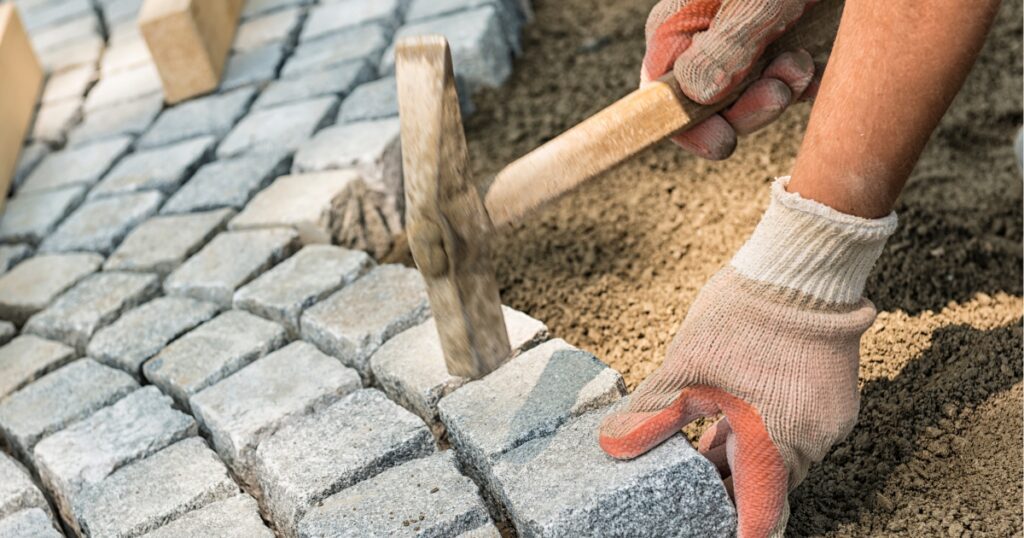
Stone Solutions brings more than 30 years of Maine outdoor construction experience, reflecting decades spent solving the challenges our landscape presents.
Choosing the right Maine patio contractor is one of the most important decisions you’ll make. For a deeper dive, read our guide on the 9 essential tips for choosing a hardscape contractor in Maine.
Step 5: Build Realistic Timelines
Construction in Maine follows nature’s schedule. While planning can happen year‑round, excavation and installation typically run from late spring through fall. Established stone patio contractors in Maine often book months in advance, especially for summer completion.
Timeline realities to expect:
- Book hardscape contractors 2–3 months ahead during peak season
- Allow 1–2 weeks for design and planning
- Budget 2–4 weeks for permitting, depending on the town
- Expect 2–4 weeks for construction based on scope
- Build in buffer time for weather delays
Also consider your household schedule. Construction noise and activity can impact daily routines, particularly if you work from home or have young children.
Step 6: Navigate Permitting Requirements
Permitting requirements vary widely by municipality. Larger towns typically enforce stricter standards, while smaller communities often take a lighter approach. Coastal properties can face environmental and setback regulations, and historic districts often require design review.
While Maine hardscaping contractors often assist with permits, legal responsibility ultimately rests with the property owner. Research your town’s requirements early and secure approvals before work begins.
Patio projects that commonly require permits include:
- Significant grading or site modification
- Work near wetlands or buffer zones
- Projects in historic districts
- Coastal properties with setback rules
- Patios exceeding size thresholds (varies by town)
With our 30+ years of experience, we’ve assisted homeowners with their permit processes in various municipalities throughout Southern Maine.
Step 7: Prepare Thoughtfully
Site preparation depends on what your property offers. If your home is on a wooded lot, it will require selective clearing, while coastal landscapes often include salt‑tolerant plantings worth preserving.
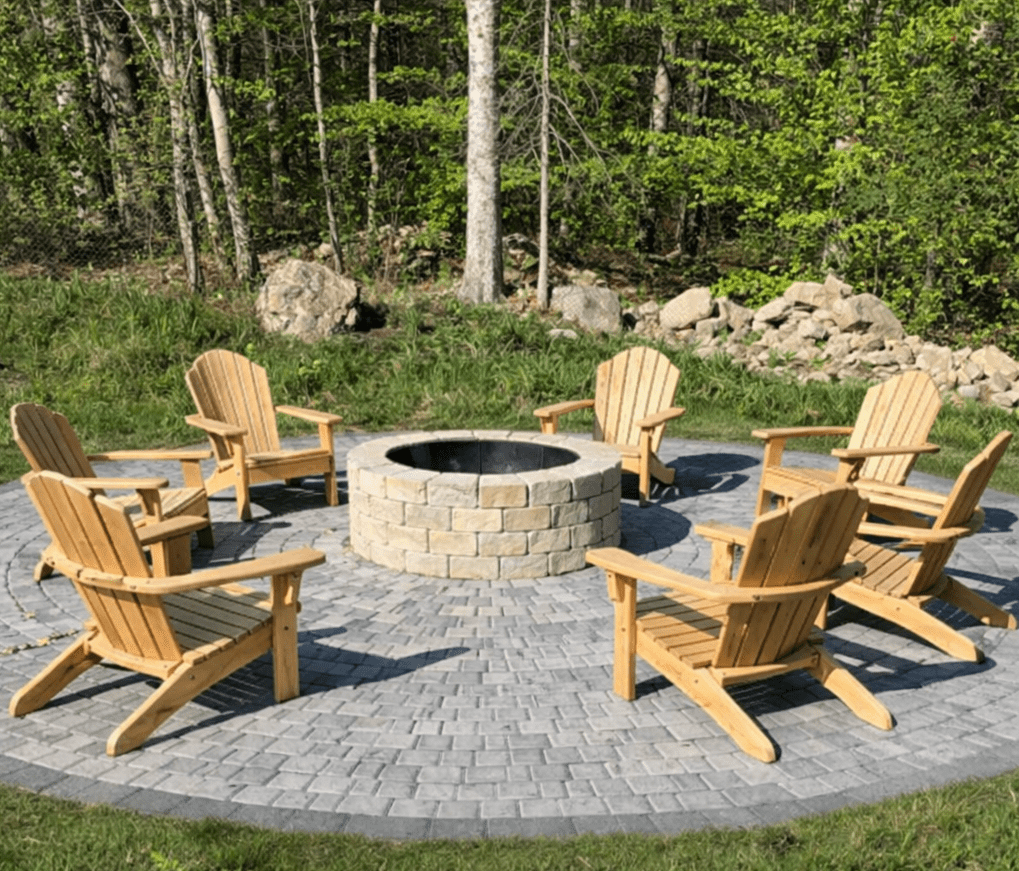
Before work begins:
- Clear debris and overgrown vegetation
- Mark plants, lighting, or features for relocation
- Designate staging areas for materials and equipment
- Notify neighbors about timelines and noise
- Identify and mark utilities and irrigation lines
- Protect nearby furniture, planters, and fixtures
Clear communication upfront helps prevent misunderstandings later.
Step 8: Stay Engaged Throughout
The foundation work beneath your finished patio matters more than anything you’ll see on the surface. Visit the site regularly and document progress so you understand what’s laying the groundwork for your patio’s lifespan.
As we mentioned earlier, excavation can reveal surprises that weren’t visible at the surface. When these arise, pause and discuss solutions before moving forward.
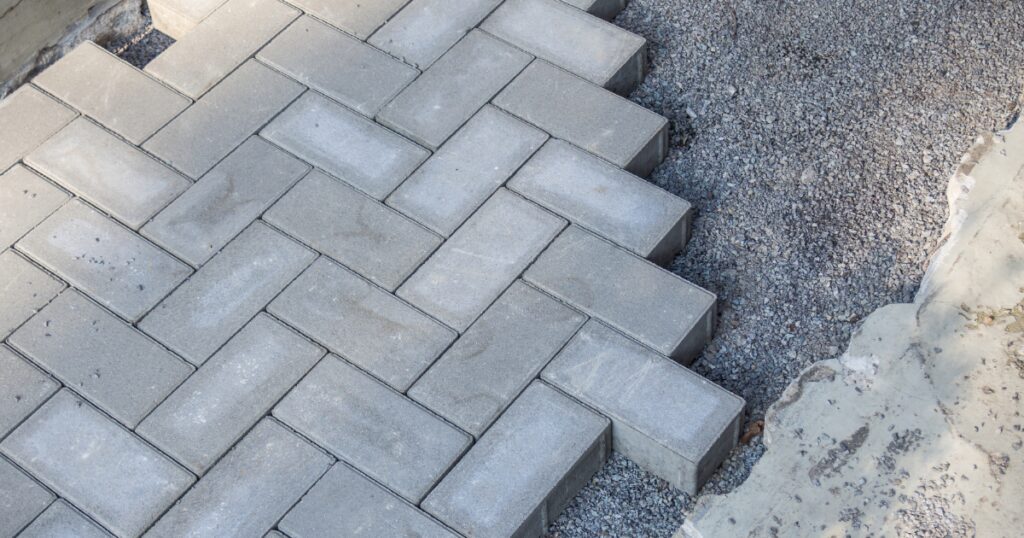
Open communication with your stone patio contractors ensures you understand not just what is being done, but why each step matters for long‑term performance.
Stay involved by:
- Visiting weekly to observe progress
- Photographing each construction phase
- Discussing unexpected conditions promptly
- Trusting professional judgment on weather‑related delays
- Addressing concerns early
Curious about how professionals plan and build patios from start to finish? Dive into our stone patio guide.
Step 9: Enjoy Your Investment!
When construction ends, you gain an upgrade in your property value and your lifestyle.
Now comes the enjoyable part: using the space. Host that first gathering. Arrange outdoor furniture. Experience how a well‑designed patio connects indoor and outdoor living.
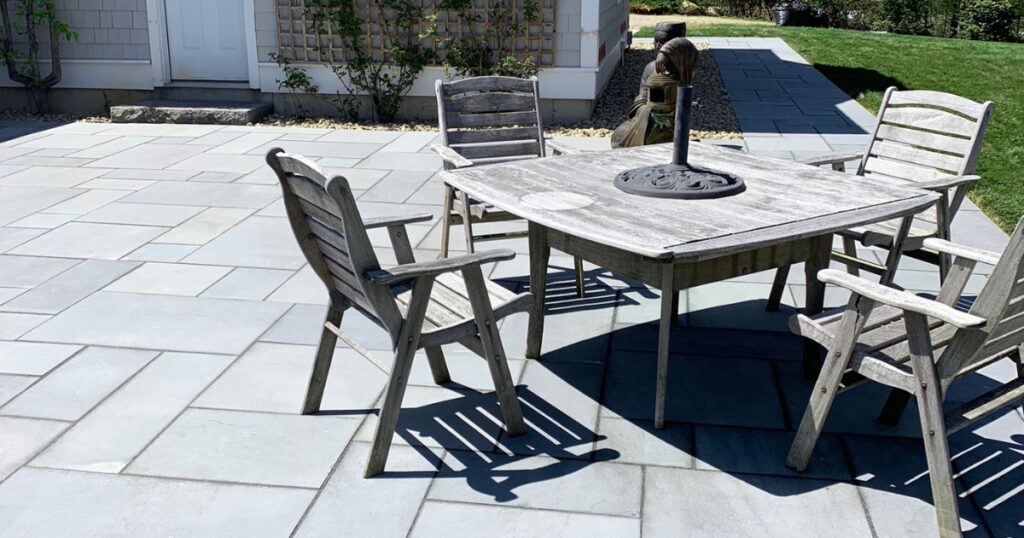
Simple maintenance keeps your investment performing:
- Sweep debris regularly to prevent staining
- Check drainage after major storms
- Rinse surfaces occasionally with a garden hose
- Inspect joints annually and replenish polymeric sand as needed
- Consider professional sealing every 2–3 years for select stone types
Begin Your Patio Transformation
Homeowners throughout Southern Maine are discovering what properly planned patios add to daily life, and loving every minute of it..
Stone Solutions brings more than 30 years of regional patio experience to every project. Our local hardscaping contractors understand coastal considerations, inland challenges, and the nuances that affect long‑term success. More importantly, we know your patio isn’t just construction, it’s where life happens.
Ready to begin? Contact us to schedule a consultation. We’ll help you explore possibilities, navigate challenges, and develop a plan that transforms your outdoor space into the retreat you’ve envisioned.