
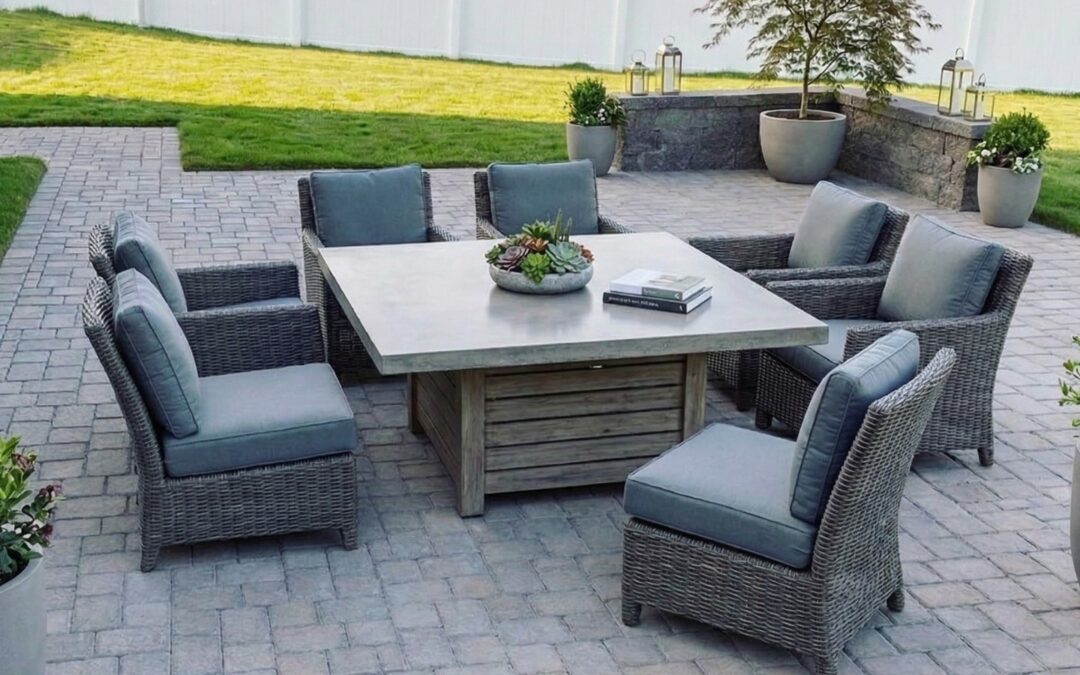
Picture this: chairs gathered around a crackling fire, dinner outside with comfortable furniture that holds up outdoors. A space that actually gets used. These are the patio ideas Maine homeowners envision when dreaming up their ideal backyard.
For most Maine homeowners, the gap between that image and reality is a well-designed paver patio. Pavers handle freeze-thaw cycles without cracking, require almost no maintenance, and can be configured into nearly any layout your property calls for.
Why Patio Designs With Pavers Work So Well in Maine
Before we get into specific patio styling ideas, it’s worth understanding why pavers are the right foundation for any Maine patio design.
Maine’s soil is in constant motion. Freeze-thaw cycling, moisture fluctuation, and the heavy, silty subsoil common in York and Cumberland Counties means the ground beneath your patio expands and contracts year after year. Monolithic surfaces like poured concrete and standard asphalt attempt to fight this movement and lose. They crack, heave, and degrade.
Paver systems are engineered to work differently. Each paver is an individual unit, and the surface is articulated. When frost pushes up, the pavers shift slightly. When the ground thaws, they settle back. That flexibility is the reason a professionally installed paver patio can last 40 to 50 years with minimal maintenance while a concrete slab may need replacement in 15.
Beyond durability, paver patio designs offer a design palette that no other material comes close to matching. Here’s a look at the most popular patio designs with pavers and what makes each one work in Maine.
The Classic Gathering Patio
Defined Space. Fire Pit. Room to Pull Up a Chair.
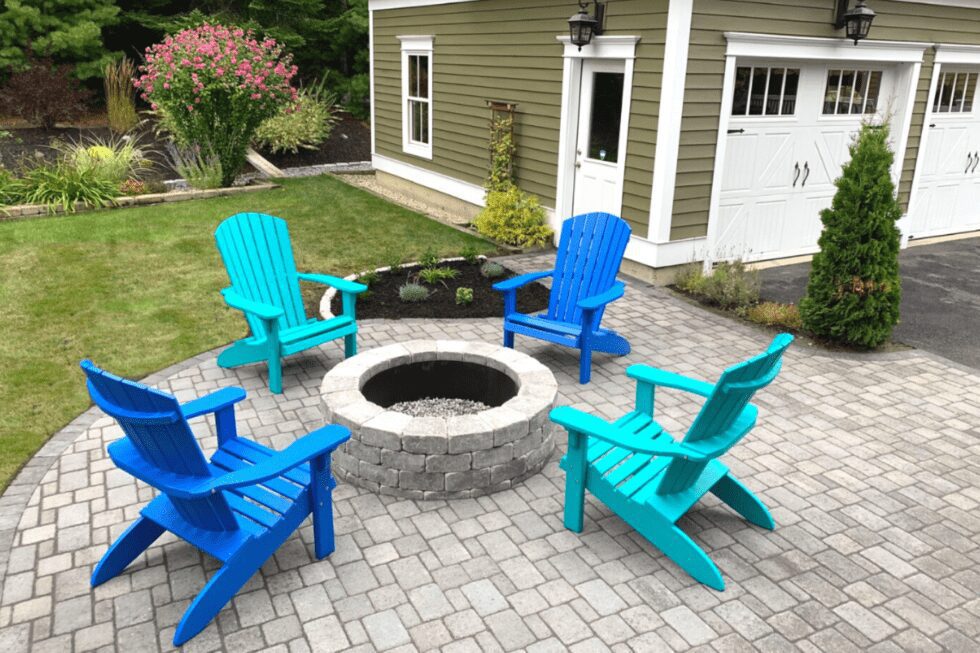
This is the one of most requested patio designs we build, and for good reason. It centers on a circular or square fire pit — either a standalone unit or a custom-built stone fire ring — surrounded by enough paved surface to comfortably seat six to eight people.
The gathering patio works because it creates a destination in the yard. Instead of a formless lawn, there’s a clearly defined space with a focal point. That definition changes how the entire property feels.
What makes it work in Maine:
- Tumbled or natural-cleft pavers in granite or bluestone create the warm, organic feel pictured here that complements a fire feature
- Seating walls built into the patio perimeter eliminate the need for separate chairs while adding definition to the space
- Proper grading and base preparation ensure the patio stays level and drains well through wet springs and heavy autumn rains
If your main backyard goal is to have a place to gather around a fire on a chilly evening, this design delivers it.
The Outdoor Dining Patio
Built for Long Meals and Summer Evenings.
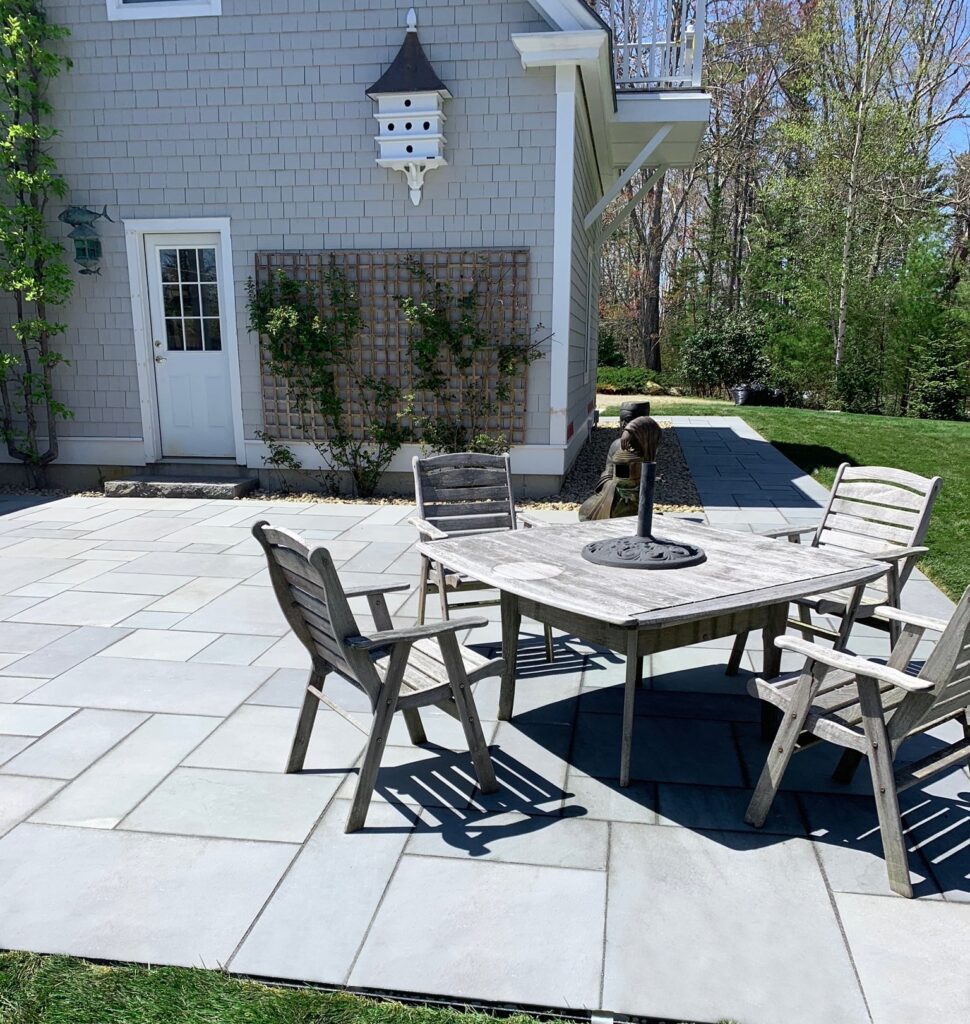
An outdoor dining patio prioritizes a flat, stable surface large enough for a full dining set. This style is typically at least 12 by 14 feet with thoughtful placement relative to the home’s kitchen or back door.
Often, we incorporate a pergola or overhead structure to define the space and provide a degree of shade. Some installations include a small service ledge or bar-height counter built into a nearby seating wall, giving you a place to stage food without running back inside.
What makes it work in Maine:
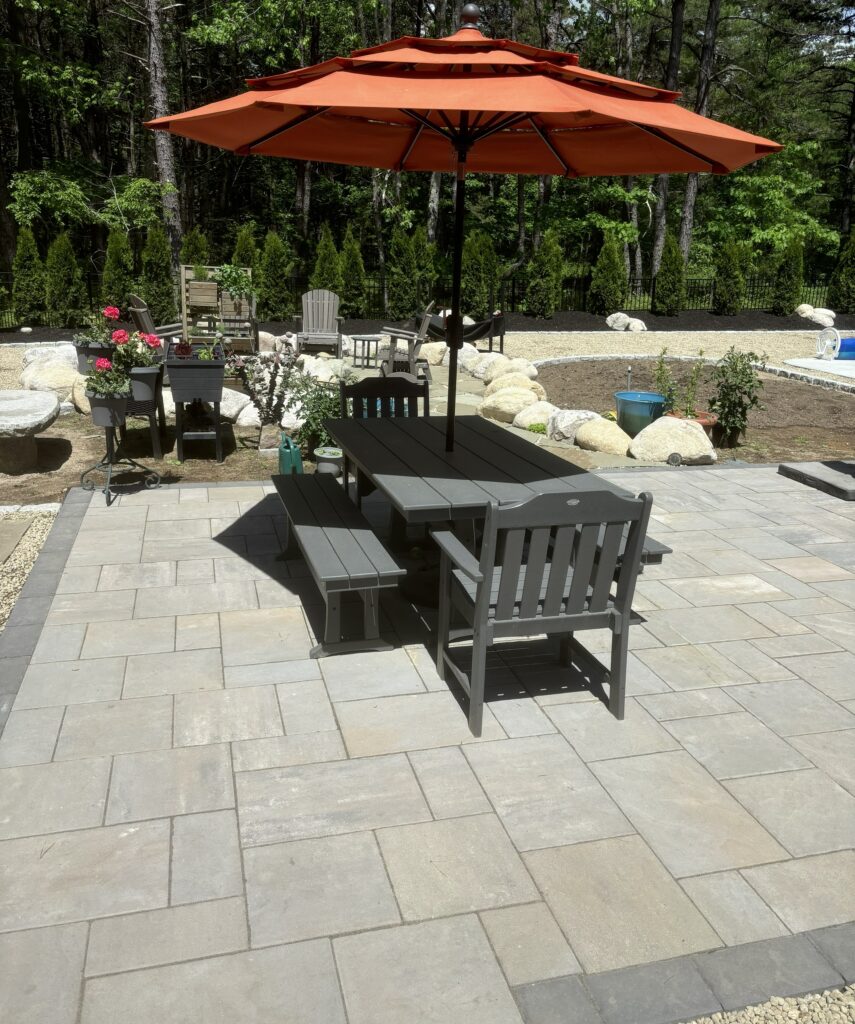
- Large-format pavers in a running bond or stacked pattern create a clean, tailored surface that reads as ‘outdoor room’ rather than just a gray slab
- Proximity to the house matters; a well-positioned dining patio cuts down on the trips back inside, allowing you to relax and enjoy dining outdoors
For Maine homeowners who entertain regularly through the summer and into fall, this design is worth prioritizing.
Before you build, here’s what to plan for.
The Multi-Zone Patio
Layered Spaces That Do More.
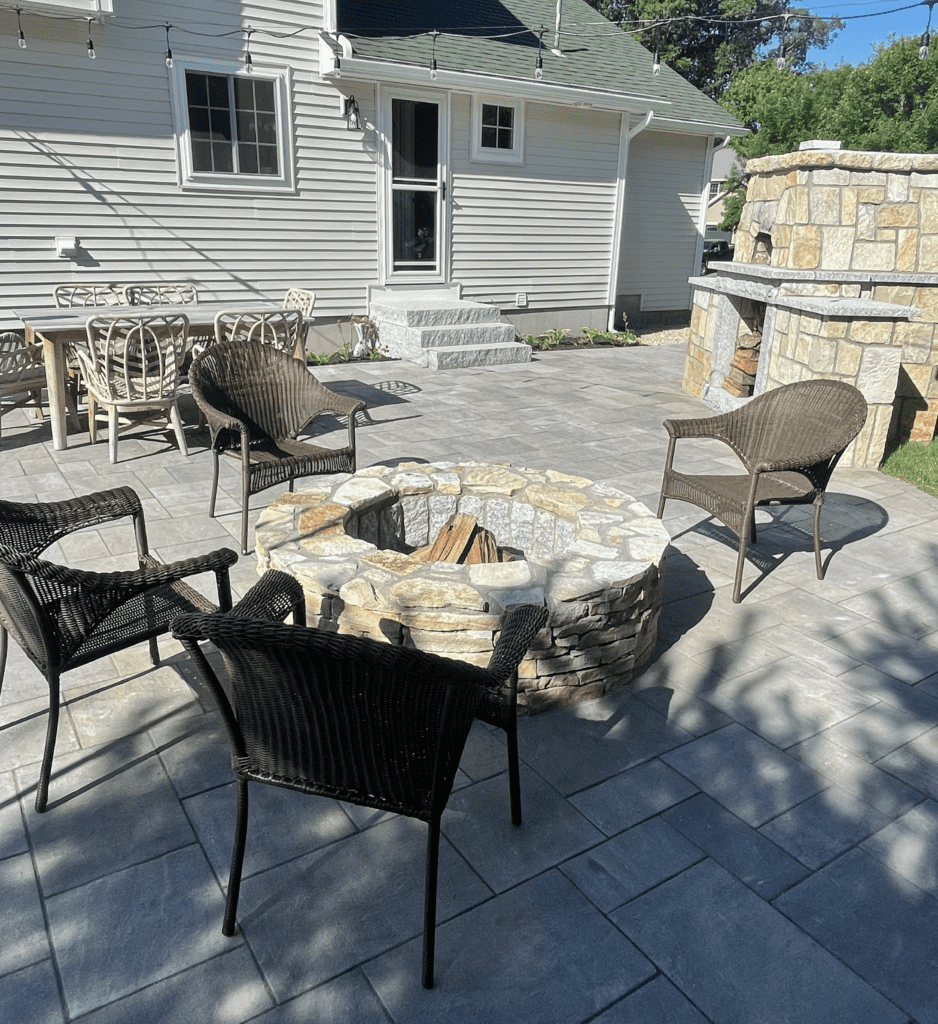
Homeowners with larger properties, or who simply want their patio to handle multiple purposes often opt for a multi-zone layout. This approach divides the patio into two or three distinct areas: a dining zone, a lounging zone, and sometimes a separate fire or garden zone.
Zones can be distinguished through elevation changes, different paver patterns, the use of seating walls as dividers, or a simple shift in material scale. The result is a patio that reads as cohesive from above but functions as multiple rooms at ground level.
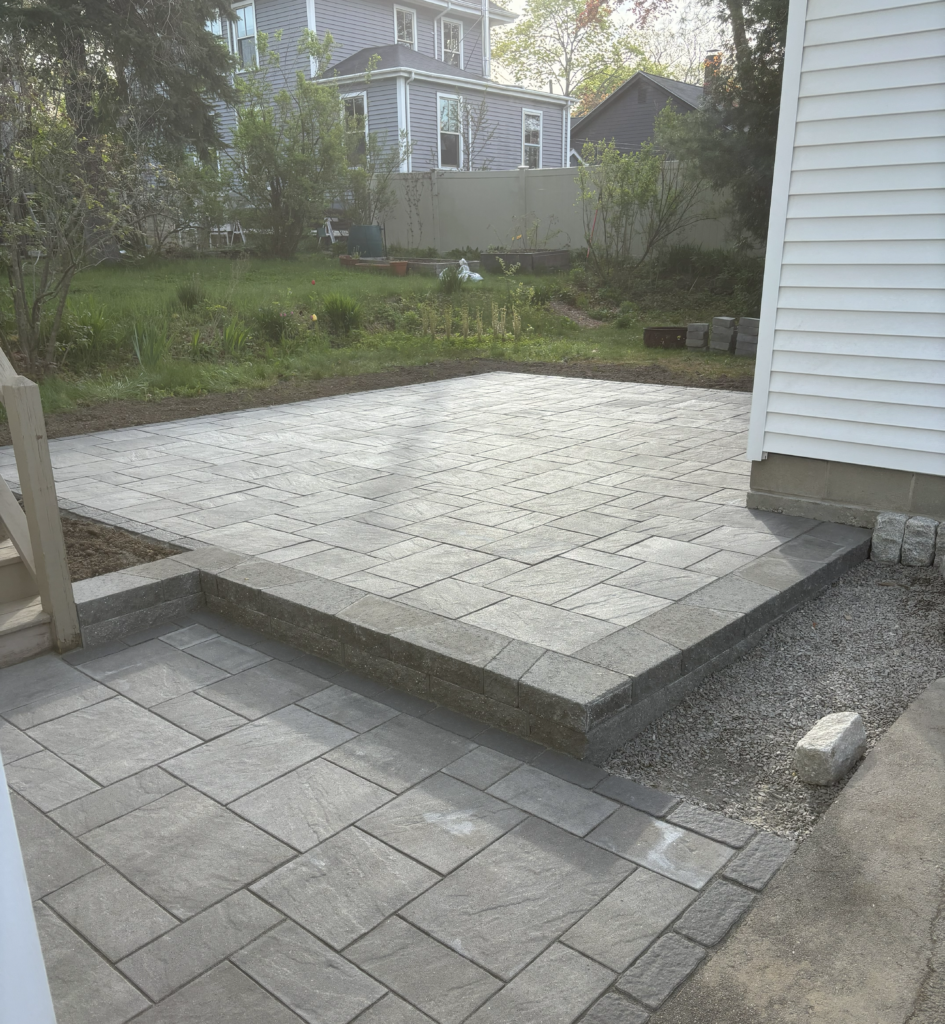
What makes it work in Maine:
- Step-down transitions between zones add visual interest and allow the patio to follow natural grade changes without requiring extensive regrading
- Mixing paver sizes creates definition without the need for visible edges or barriers. Larger format pavers in dining areas and smaller cobble or tumbled units in lounge zones set the tone for each area.
- Multi-zone patios are particularly effective on properties that back up to wooded lots, where creating a sense of enclosure improves how the space feels
This design takes more planning upfront, but the result is a patio that handles the multitude of ways a family uses their outdoor space.
The Coastal Patio
Design That Works With Salt Air and Shoreline Views.
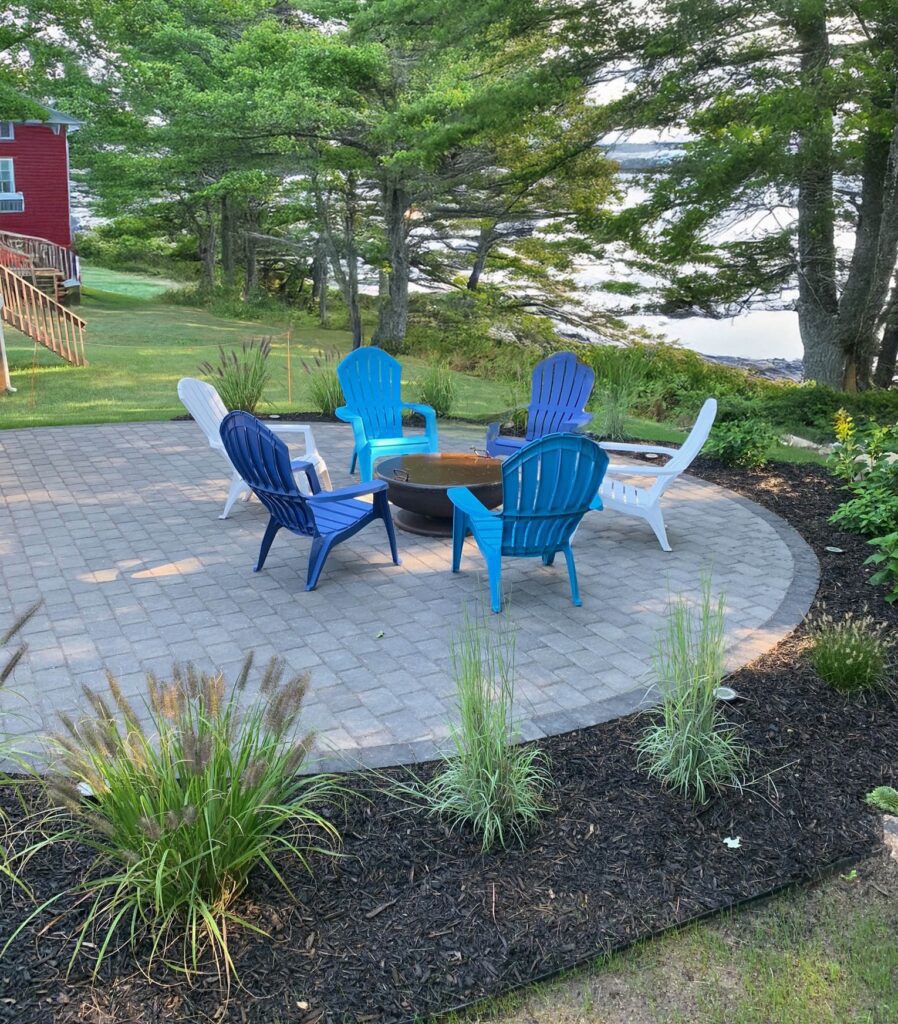
Properties in Cape Elizabeth, Scarborough, the Kennebunks, and along the York County coast have their own specific requirements, as salt air accelerates wear on materials that aren’t dense enough to handle it. Wind can make exposed patio spaces uncomfortable. And the visual setting of an ocean or estuary in the background deserves materials that don’t compete with it.
Natural fieldstone or granite pavers in muted, earthy tones are the best options for coastal patio designs. Low seating walls keep sightlines open, and we always plan a layout that favors orientation toward the view.
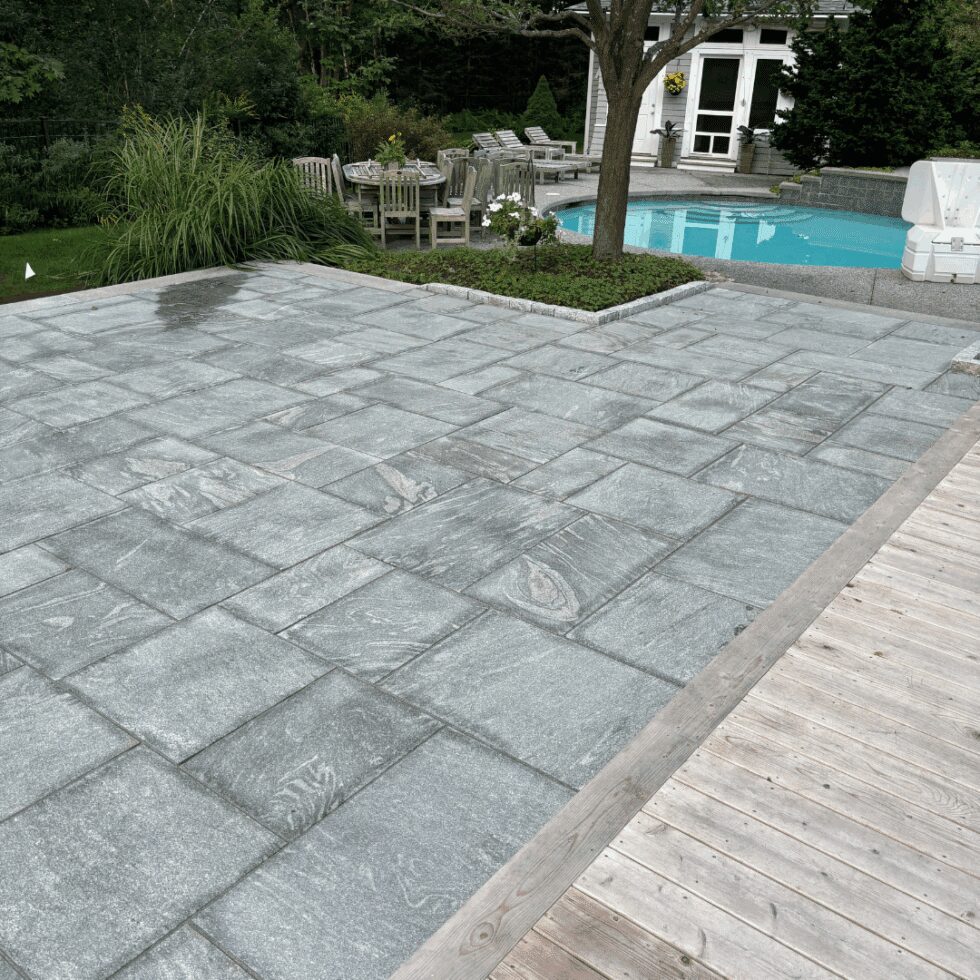
What makes it work in Maine:
- High-density granite pavers resist the pitting and scaling that salt air causes on lower-quality materials
- Permeable paver options allow rainwater to move through the surface naturally, which is a real advantage on coastal lots with high water tables or impervious surface restrictions
- Keeping the design grounded and material choices restrained lets the setting take center stage
A well-designed coastal patio disappears into the landscape and lets nature’s beauty shine.
Read more: Coastal patio design for Cape Elizabeth homes.
The Low-Maintenance Patio
For Homeowners Who Want to Use It, Not Maintain It.
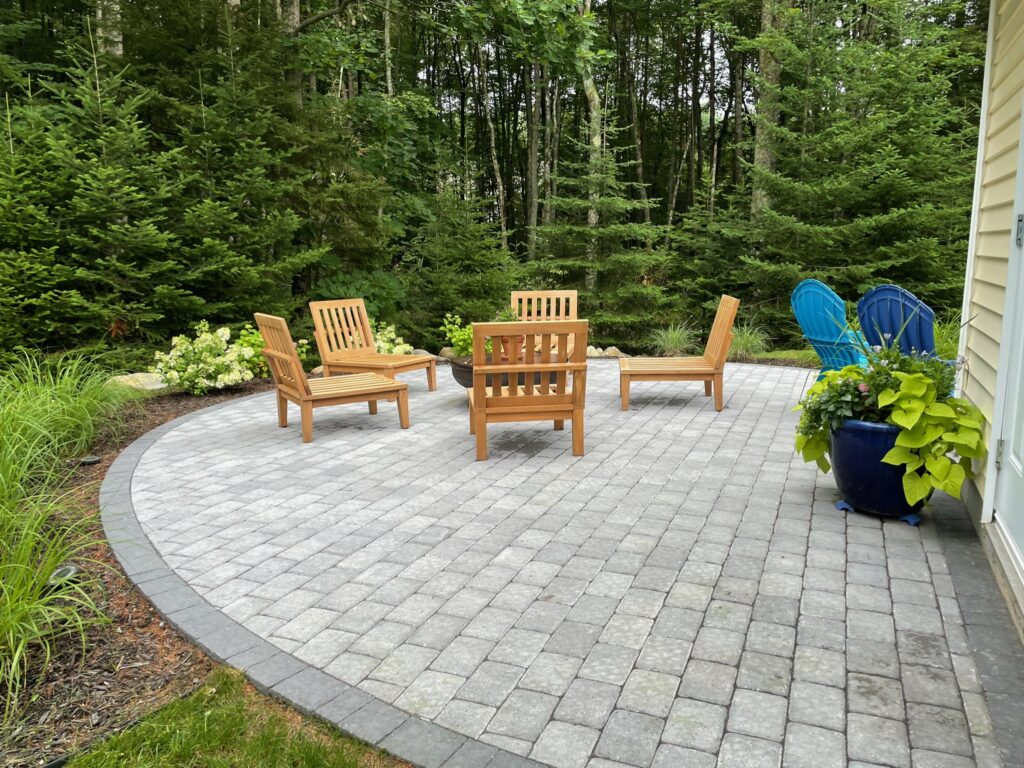
Not everyone wants a high-design, multi-zone outdoor space. Some homeowners want a clean, durable surface that looks good, holds up to Maine winters, and doesn’t require annual maintenance rituals.
The low-maintenance patio design leans on concrete pavers in simple, repeating patterns like herringbone, running bond, or a clean grid. We also use colors in the mid-range gray, tan, or charcoal tones that don’t show aging or minor soiling. To prevent weed growth and keep joint material stable for years without re-application, we use polymeric joint sand that hardens after installation.
What makes it work in Maine:
- Concrete pavers have come a long way, and current product lines offer realistic texture and color variations that reads as natural stone at a lower price point
- Simpler patterns are faster to install and easier to repair if individual pavers ever need to be pulled and reset
- Properly installed with polymeric sand and a solid base, these patios genuinely require nothing more than an occasional hose-down
There is nothing wrong with wanting a space that handles itself. That’s what good hardscaping is supposed to do.
Paver Material Options for Maine Patios
The material you choose shapes how the patio feels, how it performs over time, and how it fits into the broader aesthetic of your property. Here’s a quick overview of common options:
- Bluestone: A classic New England choice. Clean edges, consistent color, works equally well with traditional capes and modern coastal builds.
- Granite pavers: Extremely dense and long-lasting. Handle Maine winters better than almost any other material. The texture improves with age.
- Natural fieldstone: An organic, rustic look that blends naturally into wooded or coastal settings. Popular in towns like Arundel, Falmouth, and Cumberland.
- Concrete pavers: Versatile and budget-conscious. Available in a wide range of shapes, sizes, and finishes. Today’s concrete pavers look significantly better than those from a decade ago.
- Tumbled pavers: Softer edges and a weathered look. Great for informal or cottage-style properties.
The right choice depends on your home’s architecture, your design goals, and your budget over time. Stone Solutions Maine can help you match materials to all three.
What Makes the Difference Between a Good Patio and a Great One
Every patio on this list will look great the day it’s installed and years after the fact. The ones that are still looking and performing exactly as intended ten and fifteen years later have one thing in common: the work underneath the surface was done right.
Proper excavation, the right base depth for Maine’s frost line, geotextile fabric to stabilize the sub-base, compaction in lifts to eliminate air pockets, and drainage engineered for your specific property determines how the patio holds up through decade after decade of freeze-thaw cycling. This is where we focus, and none of this is visible once the pavers are set.
The truth is, anyone can lay stone. The goal is to lay it in a way that doesn’t require revisiting for the next twenty years, and that’s our expertise.
Ready to See What Your Backyard Could Become?
Stone Solutions Maine works with homeowners across Southern Maine, from Portland to Scarborough, Cape Elizabeth, Durham, Pownal, and the surrounding communities to design paver patio systems that are built for real life and real winters.
If your backyard has more potential than it’s currently showing, let’s talk about what it could become.
Contact Stone Solutions Maine to schedule your consultation.