
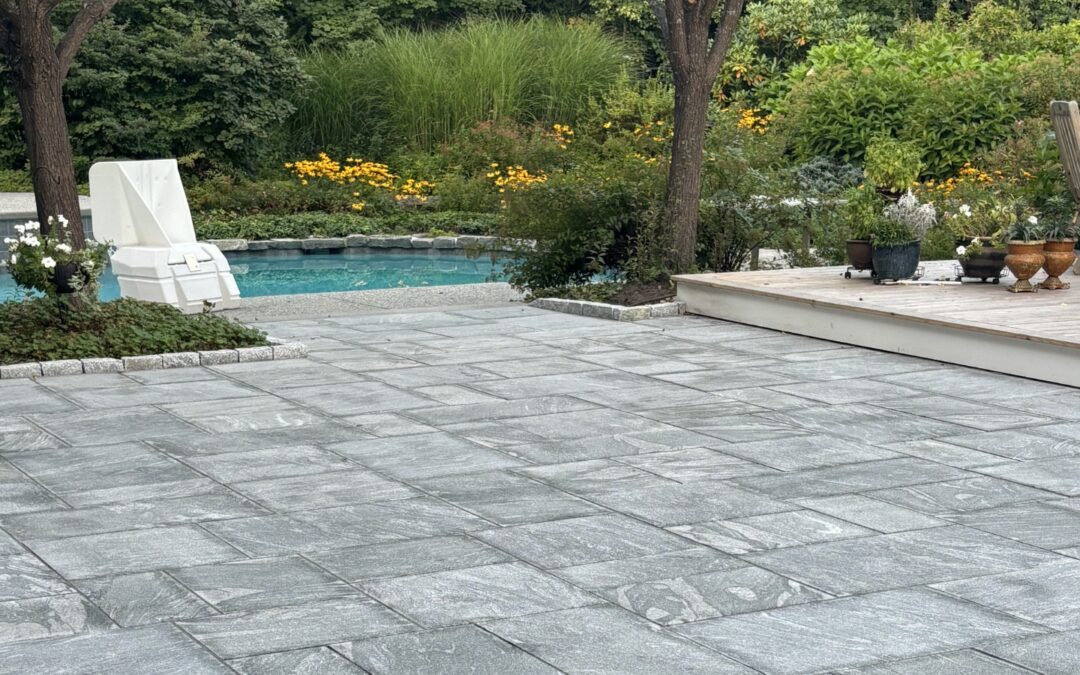
Cape Elizabeth is the kind of place where homes make a statement. Being close to the ocean and surrounded by mature landscaping, the area demands materials that are built to last. When a local homeowner reached out to Stone Solutions Maine about replacing a patio they’d never really loved, our goal was clear: tear it out and start over with something that felt as good as it looked.
Here’s how this full patio installation in Cape Elizabeth, Maine, went from demolition to done.
The Starting Point: A Patio That Never Worked
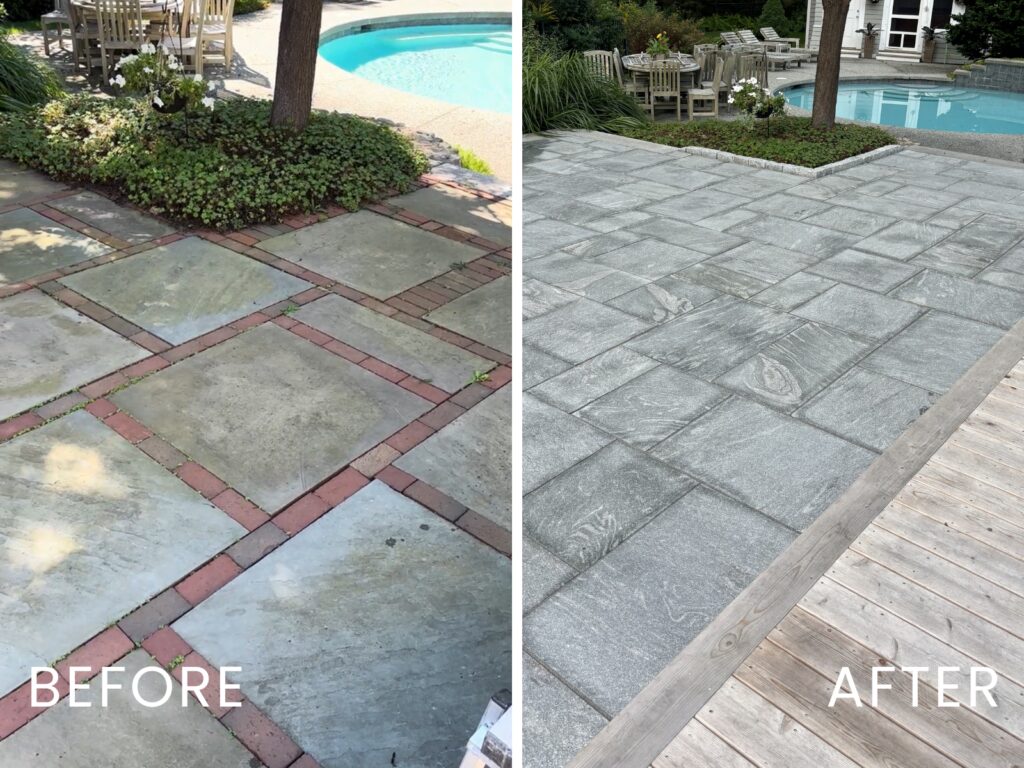
The existing patio wasn’t poorly built; it was just wrong for the space. Large 3’x3′ bluestone squares alternated with brick borders in a checkerboard pattern that felt dated. The surrounding stone wall was unattractive and poorly constructed. The overall effect was dark and heavy, making the patio feel smaller than it actually was.
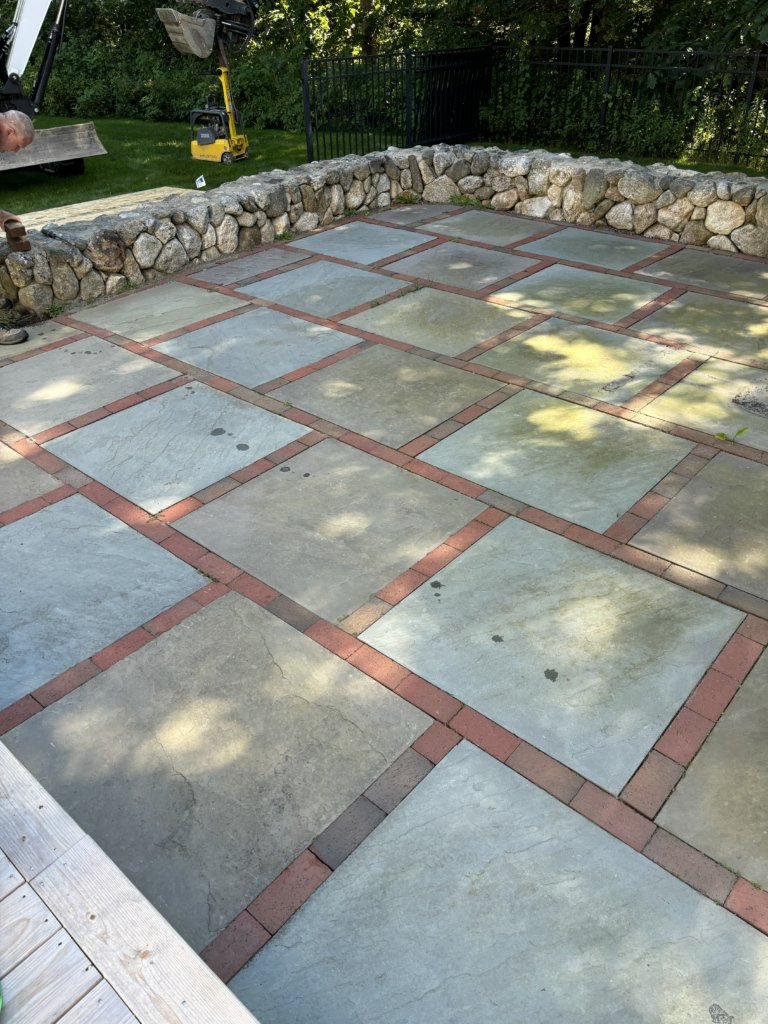
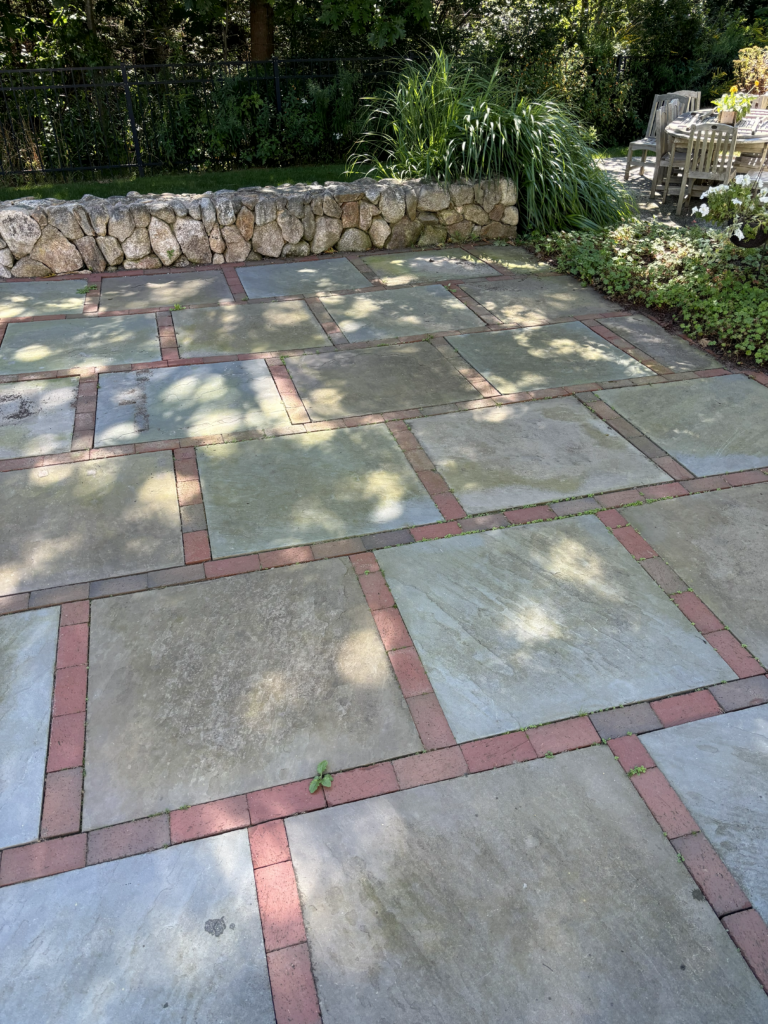
The homeowners use the space for outdoor dining and grilling, a natural gathering spot that deserved a fresh, open feel. What they had wasn’t delivering that.
Site Prep: More Than Just Demolition
Before any new stone could go down, the site required careful evaluation and prep work. That process included:
- Protecting existing irrigation. A main irrigation junction box sat close to the patio footprint. Sheets of plywood went down to protect it throughout the project.
- Removing a section of iron fencing. Equipment needed access to the site, which meant removing a portion of the existing fence to get the machines in.
- Full demolition. The entire structure — patio surface and wall — was removed and hauled away.
- Base preparation. This is where the long-term performance of a patio installation is determined: gravel, structural fabric, compaction, and the establishment of heights and edges. All of this has to be done before the first stone is set.
After 30+ years in the business, most site challenges can be anticipated during the consultation phase. The unpredictable ones tend to be things homeowners don’t know to mention, like undisclosed electrical lines, or clay found during excavation that requires deeper ground prep. Luckily, neither came up here, making this a clean project from start to finish.
Material Selection: Why Granite Was the Right Call
For a Cape Elizabeth patio project at this scale and budget, granite was the clear choice for multiple reasons.
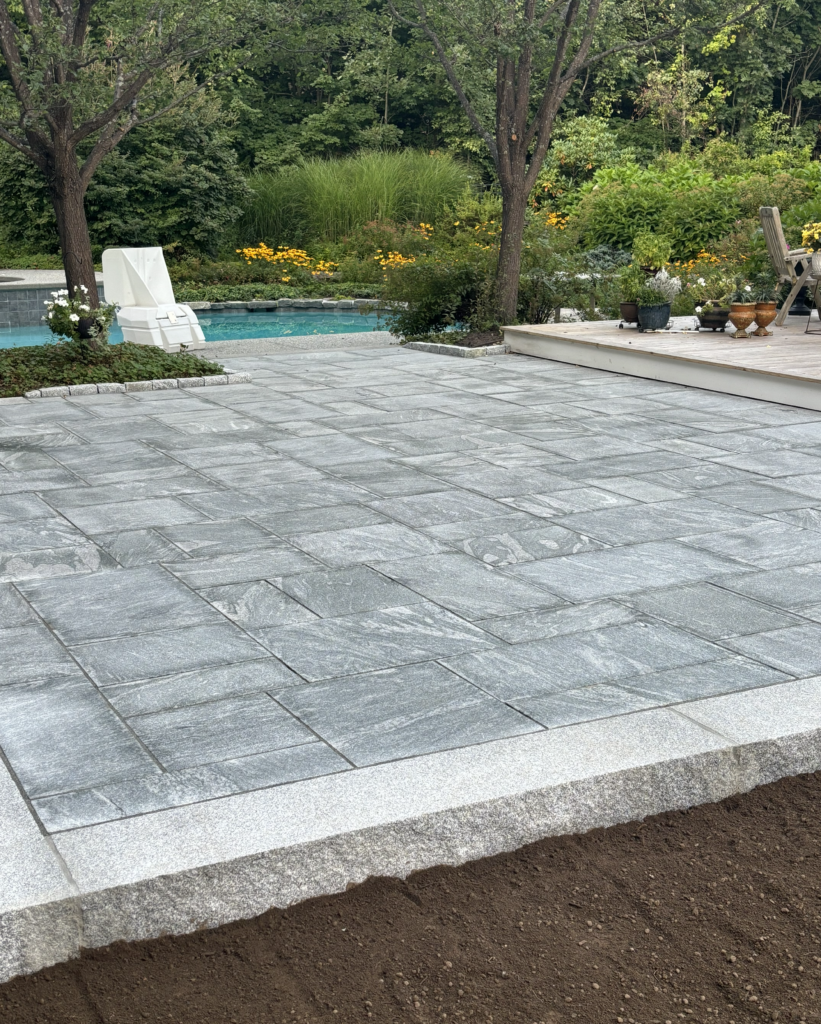
The product: Silver Ridge granite in large squares with rectangular accent pieces. The format fits the patio’s scope and the home’s size. The Silver Ridge variety has a natural swirling pattern that brings a brightness and movement to the surface, opening up the space visually rather than closing it down.
The performance case: Granite is essentially a lifetime material in New England. It’s dense enough to resist deep staining from food, drink, and oils. It holds up to Maine winters, pool water, and the salt air that affects the entire coastal zone.
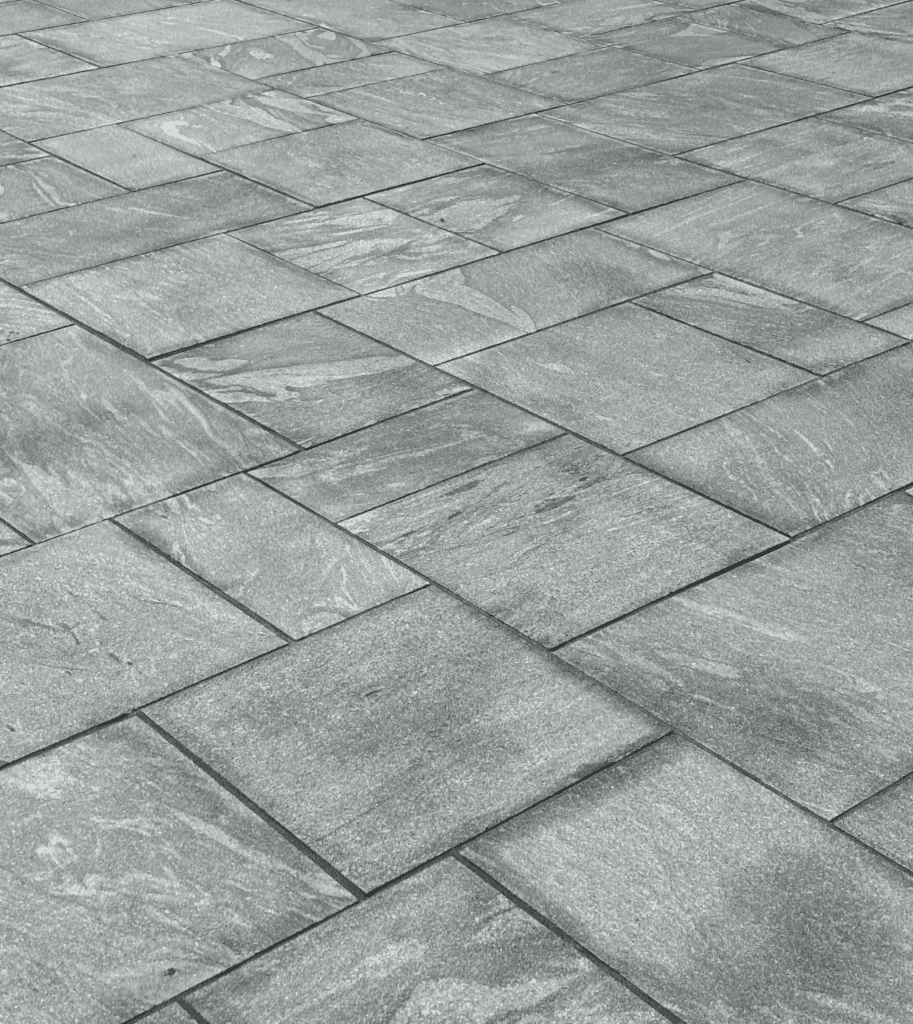
One important maintenance note for any coastal patio installation: never use salt for snow and ice removal on granite or any masonry with joints. This patio uses polymeric sand (poly sand) rather than mortar, which performs well, but salt is still damaging. Stick to alternatives like kitty litter, coarse sand, or other non-salt ice treatments.
Design Solutions: Handling Grade and Edges
One of the more technically interesting aspects of this Cape Elizabeth patio installation was solving for the existing grade. The old wall had served the structural purpose of holding the patio elevation against the surrounding yard. Without it, we needed a new solution.
Granite steps bordered the patio perimeter, providing a one-step-down transition from patio to yard along the entire perimeter. This kept grade changes to a minimum while preserving the lawn’s usability for games and activities. Cobblestone borders along sections of the patio helped blend the new installation into the existing landscaping.
The trickiest logistical element was getting equipment from the street to the work area without damaging the yard. Doing the project in late August and September helped, as drier conditions meant less ground disturbance. Even with careful timing, protecting that irrigation junction box and bridging the distance required consistent attention throughout the two-week project.
Maintenance: What Granite Actually Requires
Granite is low-maintenance by nature, but “low” isn’t “zero.” Here’s what Stone Solutions Maine recommends for long-term care of a granite patio installation:
- Seal it. A quality waterproofing sealer protects against staining and moisture penetration. Apply it and reapply regularly.
- Keep it clear. Grass clippings, leaves, and organic debris left sitting on the surface are where unwanted growth starts. Blow or brush the patio regularly.
- Monitor the poly sand. Winter weather and storms can wash out small amounts of joint sand over time. Inspect annually and refill any gaps to keep joints tight and strong.
- Skip the salt. For a coastal property, this point is worth repeating. Salt damages masonry joints and the stone itself. Use alternatives.
The Result: Bright, Open, and Worth It
The finished patio is fundamentally different. Where the old surface felt dark, compressed, and dated, the Silver Ridge granite opens everything up. The swirling pattern in the stone catches light. The clean lines of the large-format squares read as contemporary without being trendy.
Silver Ridge granite poolside patio in Cape Elizabeth, Maine by Stone Solutions
For Cape Elizabeth homeowners considering a similar patio project, whether it’s a full replacement like this one or building something from scratch, the investment pays off in how you actually use the space. A well-designed, properly installed granite patio doesn’t just look better; it also performs better. It changes the way you spend time outside.
Stone Solutions Maine specializes in patio installation, natural stone selection, and hardscape design throughout Cape Elizabeth, Scarborough, Pownal, Durham, and surrounding areas in Southern Maine. Contact us to start planning your project.