
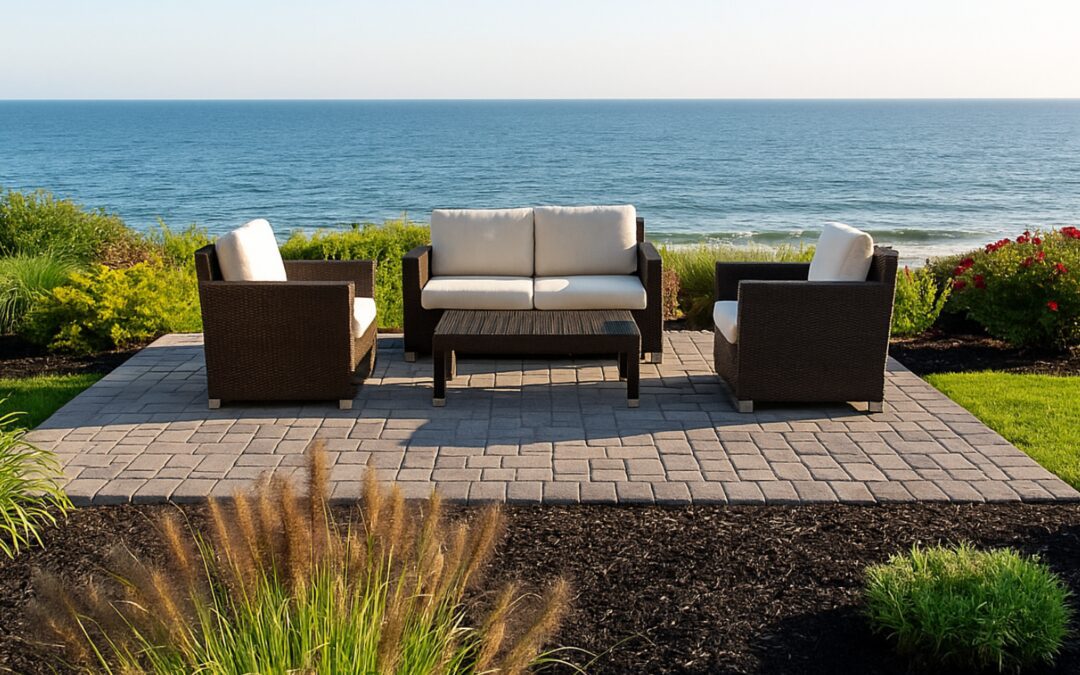
What makes a Cape Elizabeth backyard more than just outdoor space? It’s the salt air, the way afternoon light filters through the pines, and the promise of countless summer evenings spent outside. Your backyard should feel like an extension of the coastal lifestyle that drew you here — a place where natural stone pathways lead to fire-warmed conversations and mornings begin with coffee on a perfectly placed patio.
The truth is, designing a coastal patio is less about picking pretty pavers and more about understanding how the space will actually be lived in. At Stone Solutions Maine, we’ve learned that the best patios aren’t just beautiful — they’re thoughtfully planned to work with Cape Elizabeth’s unique coastal conditions, your home’s architecture, and the way you want to spend your time outdoors.
Start Where Your Home Meets the Horizon
Before we talk about anything else, let’s talk about what makes your property special. In Cape Elizabeth, Maine you’re probably dealing with ocean views, salt air, persistent wind, or maybe a gorgeous wooded backdrop. The magic happens when your patio design embraces these elements rather than fighting them.
We always begin by walking the property with homeowners. We’re looking at where the best views are, how the sun moves across the yard throughout the day, and where the wind hits hardest. A west-facing patio might offer spectacular sunsets, but without proper shade planning, it can be uncomfortably hot on summer afternoons. Meanwhile, that sheltered eastern corner? Perfect for morning coffee with gentler light.
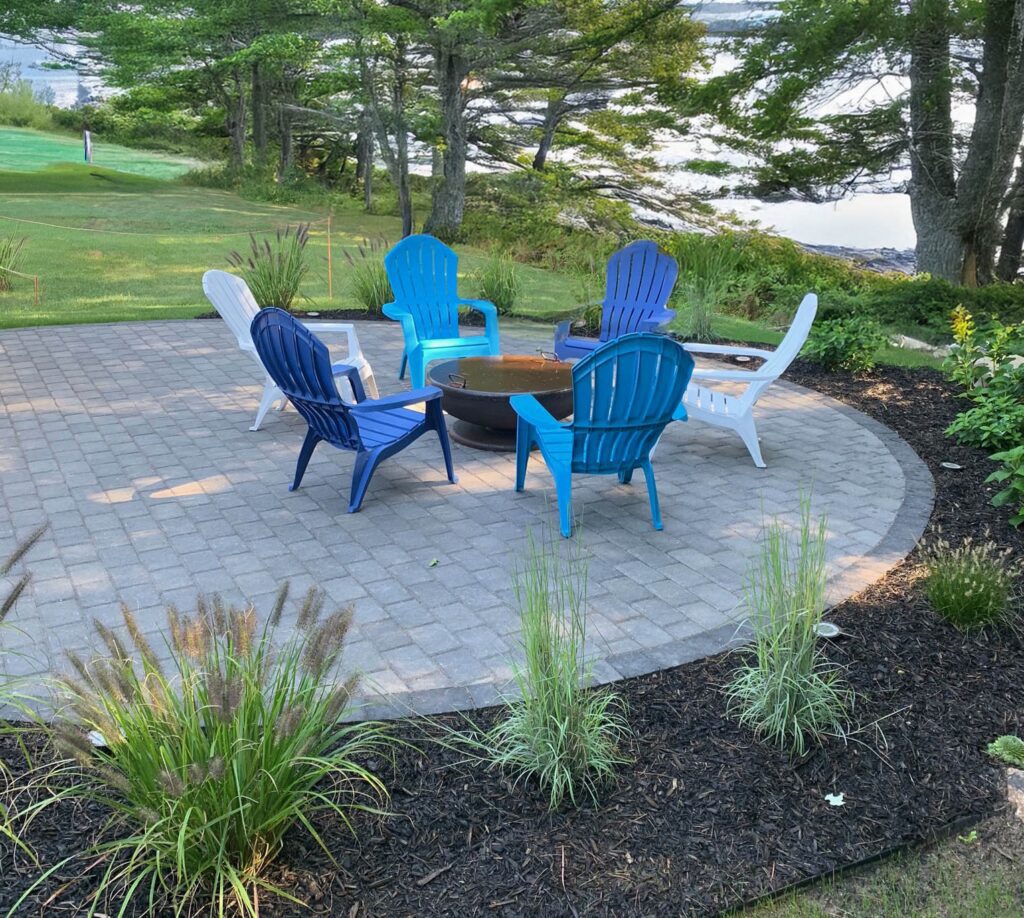
Your home’s orientation tells us where the patio wants to be. Sometimes the obvious spot — right off the back door — isn’t actually where you’ll enjoy spending time. Maybe there’s a better view from the side yard, or perhaps positioning the patio at an angle to the house opens up a sight line you hadn’t considered. The goal is finding that sweet spot where indoor and outdoor living feel like one continuous experience.
Think Beyond “A Place to Put Furniture”
Here’s where many patio projects go sideways: treating the entire space as one big, flat expanse. But think about how you actually use your home’s interior — you don’t eat dinner in the hallway or read a book standing in the kitchen. Outdoor spaces deserve the same thoughtful zoning.
Imagine specific moments you want to create:
- Dining area: Close to the house for easy access, with built-in stone walls or strategic plantings for wind protection
- Lounge zone: Positioned to capture sunset views, with comfortable seating for reading or conversation
- Activity space: An open area for kids to play or for casual gatherings around a fire pit
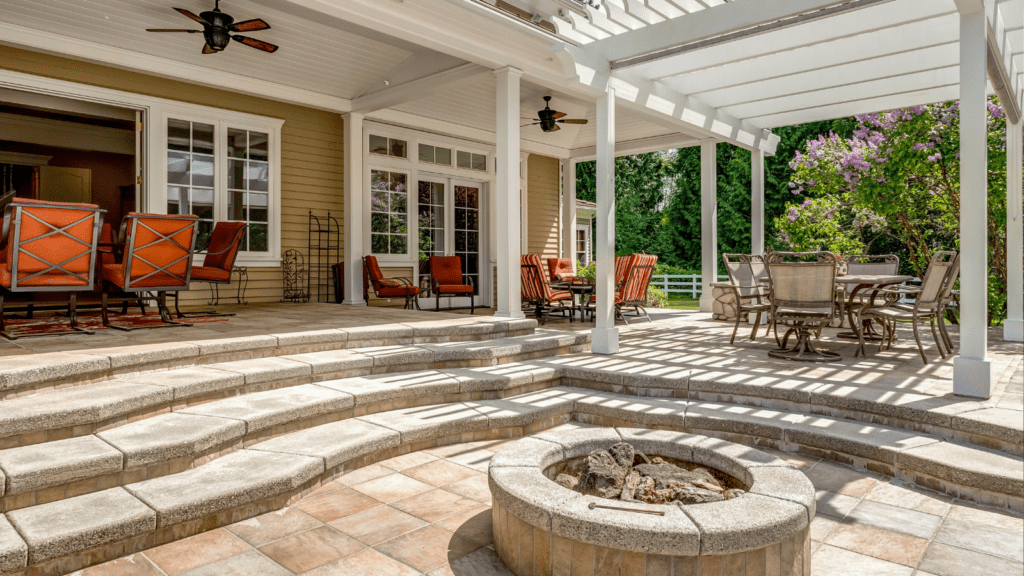
The best coastal patios have distinct areas that flow into each other. These zones don’t need hard boundaries — they’re created through layout, level changes, and how we integrate seating or landscape features.
This zoning approach does something important: it makes your patio feel intentional rather than empty. Even without furniture in place, a well-designed patio has visual interest and clear purpose.
Let the Landscape Do Some of the Work
A patio that looks like it was dropped onto your yard from outer space isn’t what anyone wants. The most successful coastal outdoor spaces feel like they’ve always been there — like natural extensions of both your home and the surrounding environment.
This is where landscape integration becomes crucial. Native coastal plants don’t just look beautiful — they serve real functional purposes:
- Coastal grasses and Rosa rugosa: Soften the transition between hardscape and lawn while tolerating salt spray
- Beach plums and native shrubs: Provide privacy without blocking views and create natural windbreaks
- Strategic placement: Buffer wind, frame views, and define spaces without heavy construction
Discover the best plants to border a stone patio for color and texture.
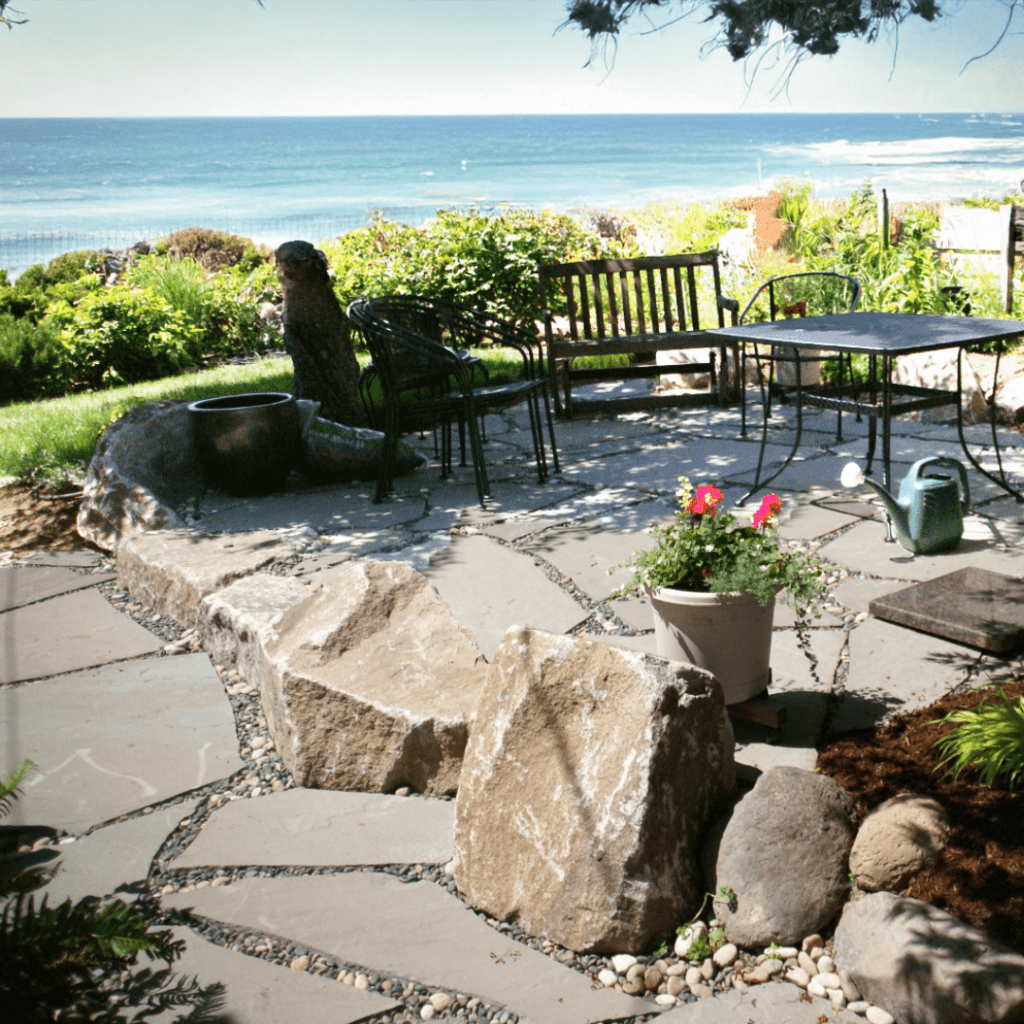
If your property slopes toward the ocean or has any grade changes, embrace them. We often use terracing and natural stone retaining walls to work with the topography rather than flattening everything. Steps can create drama and define zones. A terraced patio feels dynamic and follows the land’s natural rhythm.
And don’t forget connections. A patio shouldn’t be an island. Thoughtful pathways to your garden, driveway, or beach access make the space feel integrated into your property’s flow. These connections also affect how people move through the space — and whether your patio becomes a well-used outdoor room or an afterthought.
Design for the Coastal Reality
You know what looks great in magazines? Patios designed for inland suburbs. You know what doesn’t work in Cape Elizabeth, Maine? Those same patios.
Coastal living comes with specific challenges: wind that can turn a lovely dinner party into a napkin-chasing adventure, salt spray that takes a toll on everything it touches, and sun exposure that shifts dramatically with the seasons. The good news? With smart design, you can work with these elements instead of constantly battling them.
Managing wind without losing views:
- Natural windbreaks like shrubs or gentle berms reduce gusts without obstructing ocean views
- Built-in stone seating or low walls provide both function and wind protection
- Strategic patio orientation can angle away from prevailing winds
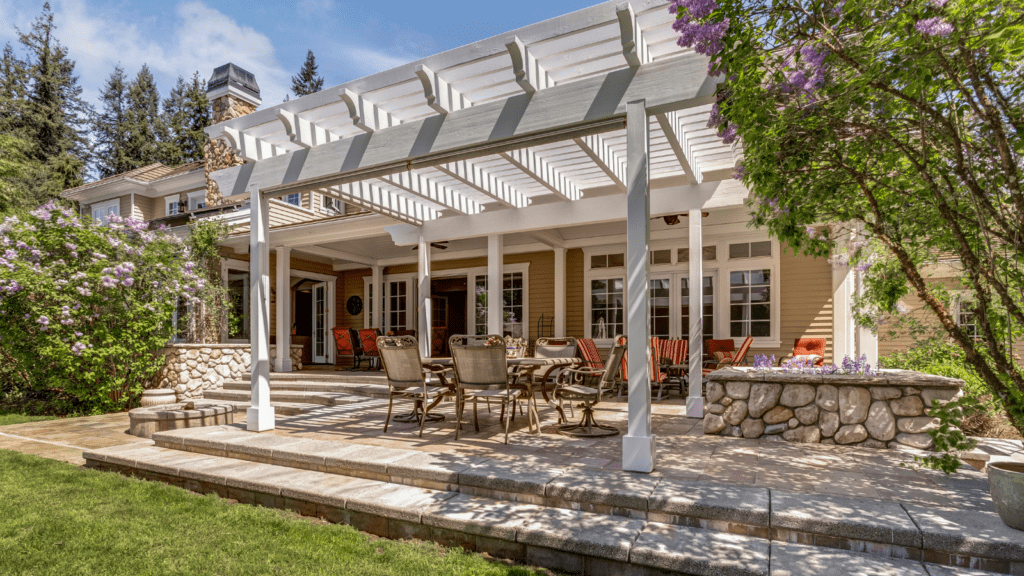
For sun control, think flexible. A pergola with retractable shade fabric gives you options: full sun for spring afternoons, dappled shade for summer. Roof overhangs can provide relief during high summer sun while still allowing lower winter light to warm the space. We had one Cape Elizabeth client who initially wanted full sun exposure. After discussing their actual usage patterns — mostly evening dining and afternoon entertaining — we added a strategically placed sail shade. It transformed the space from unusable on hot days to their favorite summer spot.
Learn more about how to choose the right pergola material for your space.
Make Movement Feel Natural
Here’s a design element that often gets overlooked until it’s too late: circulation. How do people actually move through your patio? Can someone get from the house to the dining table without squeezing between chairs? Can you reach the lounge area without trampling through the garden?
Good circulation is invisible — it just feels right. Wide, clear pathways mean guests don’t feel like they’re navigating an obstacle course. Thoughtful placement of steps means no awkward transitions or tripping hazards. We always think about accessibility too. Gentle slopes instead of abrupt steps, smooth walking surfaces, wide enough paths for older family members or anyone with mobility considerations — these details make spaces welcoming for everyone.
The layout should also account for furniture placement. Where will the dining chairs actually go when people push back from the table? Is there a clear path behind the grill? These practical considerations prevent your beautiful patio from feeling cramped or awkward in real-world use.
Read more about southern coastal Maine patio designs for summer entertaining.
Plan for All Four Seasons
Maine doesn’t do endless summer, and your patio design shouldn’t pretend otherwise. The most successful coastal patios we’ve created work across all seasons, not just July and August.
Summer is obvious — you want space for dining, entertaining, and soaking up sun. But what about those crisp October evenings when you’re not quite ready to retreat inside? A fire pit zone with wind-protected seating extends your outdoor season significantly. Built-in elements like stone benches or planters provide structure that looks intentional even when furniture is stored for winter.
We’ve had clients tell us they appreciate their patios most in the off-season. When the space is designed with fall and spring in mind — with windbreaks, sun-trapping corners, and flexible features like movable fire pits — you end up using it March through November instead of just June through August.
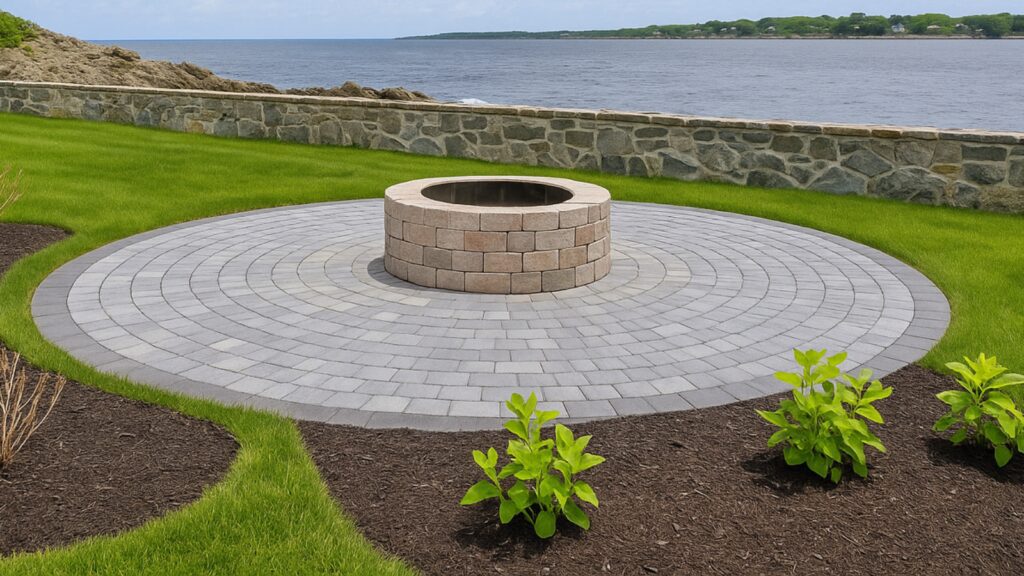
Even in winter, a well-designed patio serves a purpose. As a visual extension of your indoor space, it provides structure to your winter landscape. Those stone walls and terraces look beautiful under snow, creating architectural interest that maintains your connection to the outdoors year-round.
The Local Knowledge Advantage
Here’s the thing about designing coastal patios: experience matters. Cape Elizabeth isn’t Portland isn’t Portsmouth. Local wind patterns, seasonal drainage, freeze-thaw cycles, salt exposure levels, soil conditions, and even permitting requirements vary significantly.
At Stone Solutions Maine, we start every project with a consultation that goes beyond measurements. We assess your specific microclimate — where does morning sun hit, where do afternoon shadows fall, how does wind move across your particular plot? We look at topography and drainage patterns. We discuss how you actually want to use the space, not just what you think you should want.
We’ve worked on enough Cape Elizabeth, Maine properties to know the patterns. We know which slopes need extra drainage consideration, how to position patios for the best seasonal sun, and which design approaches hold up best in coastal conditions. That local knowledge saves homeowners from expensive do-overs and creates spaces that truly work.
The result is a patio that isn’t generic or templated — it’s designed specifically for your home, your landscape, and your coastal Maine lifestyle.
The Bigger Picture
Designing a patio for your Cape Elizabeth home means thinking holistically. It’s about understanding how views, sun, wind, and topography interact. It’s about creating zones that support different activities without feeling segmented. It’s about landscape integration that makes the patio feel like it belongs. And it’s about planning for real-world use across all four seasons.
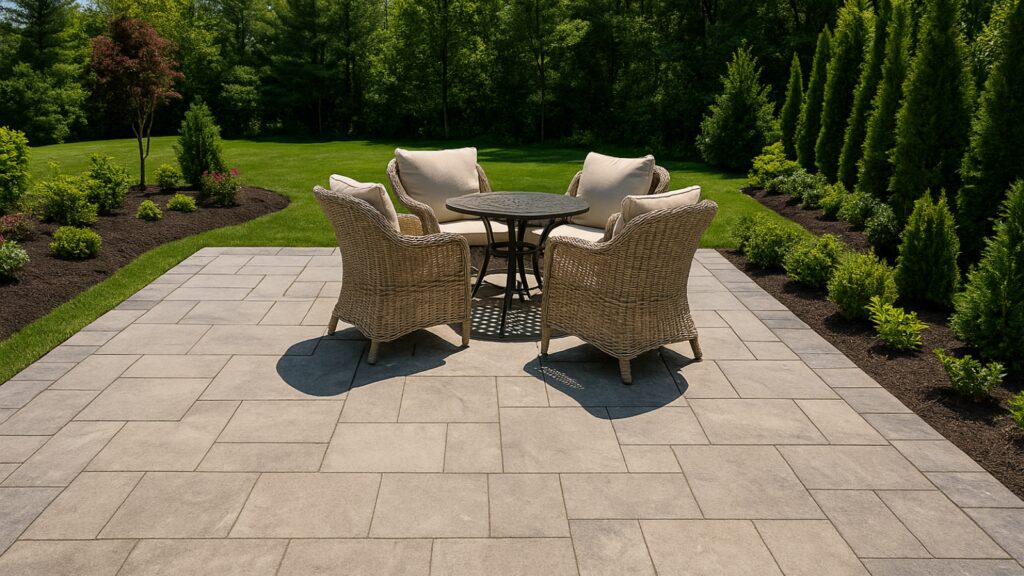
The best coastal patios don’t just look good in the initial photos — they become the places where life actually happens. Morning coffee with ocean views. Summer dinners that stretch into sunset. Fall evenings around the fire pit. These are the spaces where your coastal retreat truly becomes a daily reality.
With thoughtful design, local expertise, and careful attention to how you’ll actually live in the space, your patio can become more than just an outdoor amenity. It becomes an extension of your home that you’ll enjoy for decades to come.
Ready to design a Cape Elizabeth, Maine patio that works with your home and landscape? Contact Stone Solutions Maine today to schedule a consultation. Let’s create a coastal outdoor space you’ll love to enjoy in every season.