
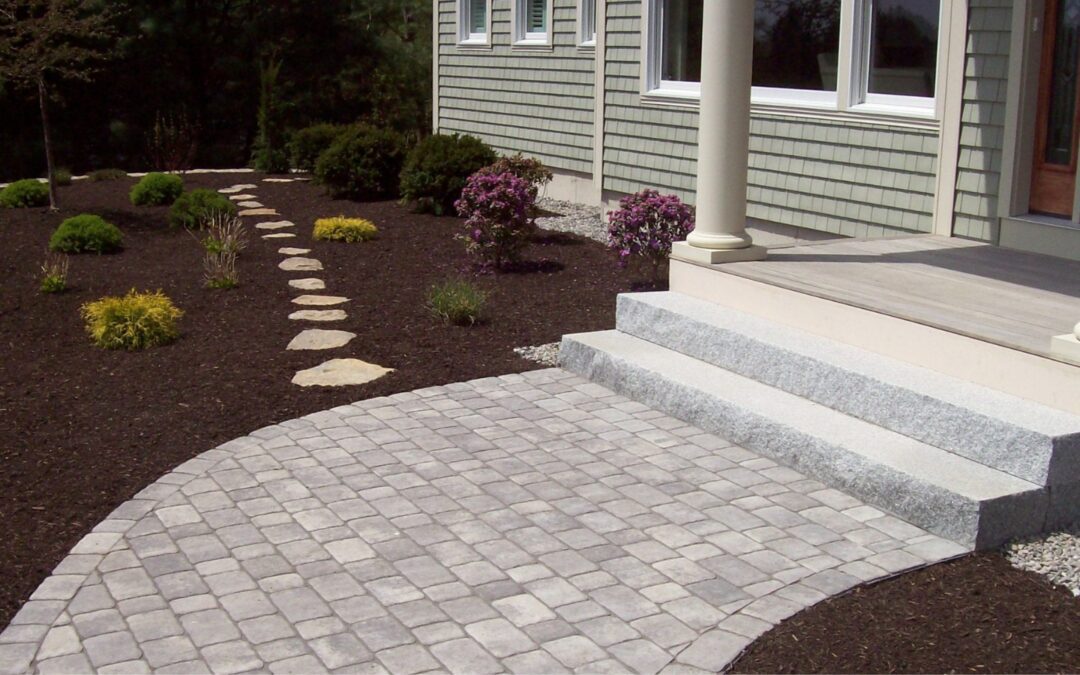
Your front walkway gets more use than you might realize. It’s the path you, your guests, and anyone visiting your home travel daily. Problems rarely appear overnight; they start small — a crack here, a dip there — and suddenly, patchwork replaces the original path.
If you’re wondering whether to repair your walkway or replace it entirely, keep an eye out for these signs that point toward starting fresh.
1. Cracks That Keep Coming Back
A single crack after a rough Maine winter isn’t a crisis. But if you’ve filled the same cracks more than once, or if new ones keep appearing nearby, that’s your walkway telling you something deeper is going on.
In southern Maine, freeze-thaw cycles are the biggest culprit. These occur when water enters small cracks, freezes (expands), then thaws (shrinks), repeatedly forcing the walkway material apart and widening any openings. Over time, patching becomes a losing game. You’re treating the symptom, not the cause. When cracks become a recurring problem, the base (the compacted layer under your walkway that supports it) is usually compromised, and no amount of filler will change that. If you’re patching the same sections every spring, it’s time to have a real conversation about replacement.
2. Sunken or Uneven Sections
Walkways that dip, tilt, or rock underfoot are a trip hazard — and in Maine, they’re even more dangerous when they’re slick with rain or ice.
Sinking often means the base beneath has shifted, eroded, or settled unevenly. Causes include tree roots, poor grading, and freeze-thaw cycles. Resetting a paver may work temporarily, but widespread settlement requires full removal, proper regrading, and replacement. Level walkways improve safety.
3. Drainage Problems
Water should move away from your home, not pool on your walkway or sit against your foundation. If your walkway’s drainage is failing, you’ll usually notice it in a few different ways:
- Standing water that lingers on the surface after a heavy rain
- Mud or erosion collecting along the edges of the walkway
- Water pooling near your foundation or basement entry
- Soft spots in the lawn directly beside the path
Poor drainage is often ignored, but it can harm more than your walkway — it may threaten your foundation, lawn, and landscaping. Homes on uneven lots or with high water tables especially need proper grading. A new walkway with correct drainage prevents ongoing issues.
4. Surface Scaling or Spalling
Scaling and spalling (where the surface layer of concrete or stone flakes off in sheets or chunks) is more than an eyesore. It’s a sign that the material itself is breaking down from the inside out.
This often happens when de-icing salts (substances like rock salt used to melt ice in winter) penetrate the surface and accelerate freeze-thaw damage (expansion and contraction with temperature swings) at deeper levels. Once the surface starts deteriorating this way, it tends to progress quickly. Sealers, protective coatings that help block water and chemicals, can slow it down early on, but once scaling becomes widespread, no topical treatment can reverse the structural breakdown. The material needs to go.
5. Widening Gaps Between Pavers or Stones
If your walkway was originally installed with natural stone or pavers, pay attention to the joints, which are the lines or gaps filled with sand or mortar. Gaps that are widening, joints that have washed out, or stones that wobble when you step on them are signs that the bedding material beneath (the supporting sand or gravel layer) has eroded or compacted unevenly.
Loose, shifting pavers are unsafe and allow water to seep in, worsening the problem. Isolated fixes are possible, but widespread gaps call for a full reinstall with proper prep.
6. The Walkway No Longer Matches Your Home
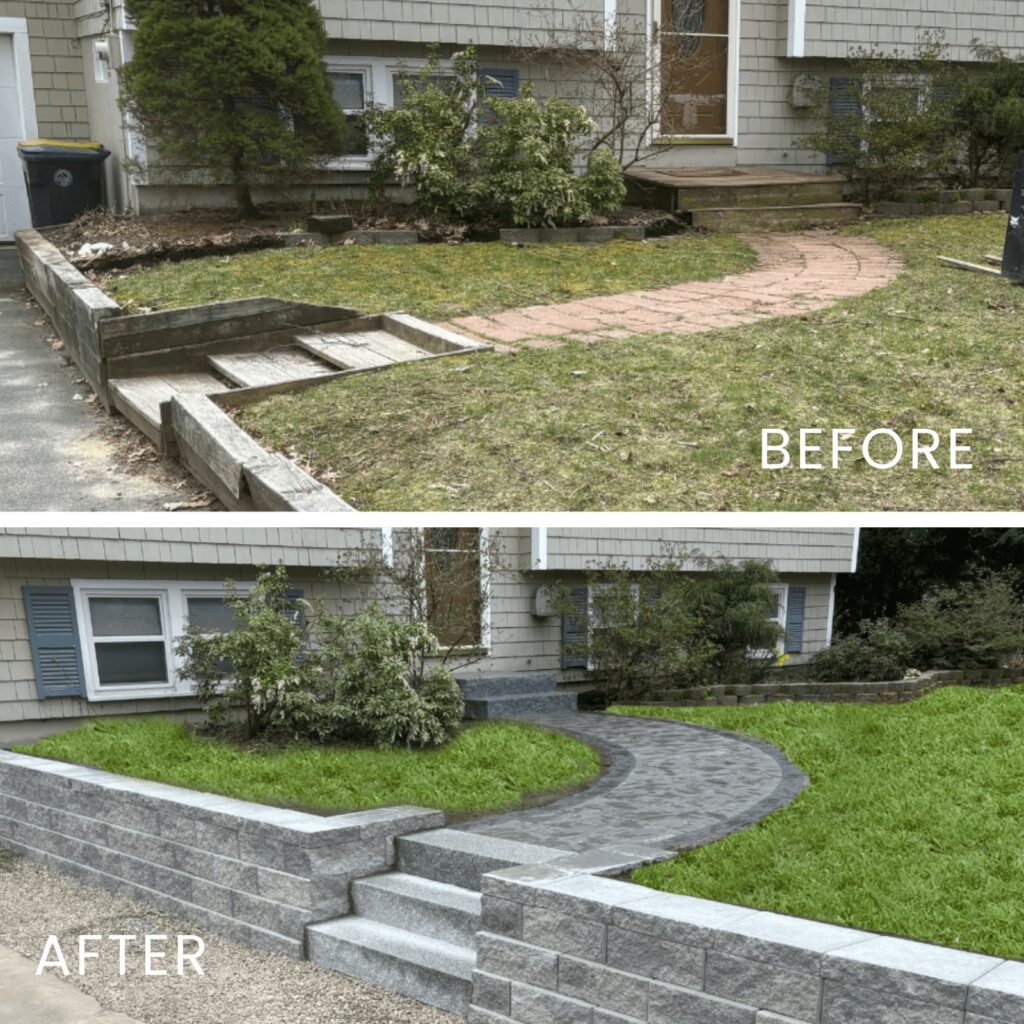
Sometimes it’s not about damage — it’s about the fact that your home has changed and your walkway hasn’t kept up. A tired concrete slab or crumbling asphalt path can drag down the look of a home that’s been updated, landscaped, re-sided, or had new windows installed in recent years.
Your walkway is a crucial design feature. In cared-for neighborhoods, an outdated path detracts from your home’s look. Upgrading the walkway ties your exterior together and can boost value if you’re selling.
7. It’s Become Too Narrow for How You Actually Use It
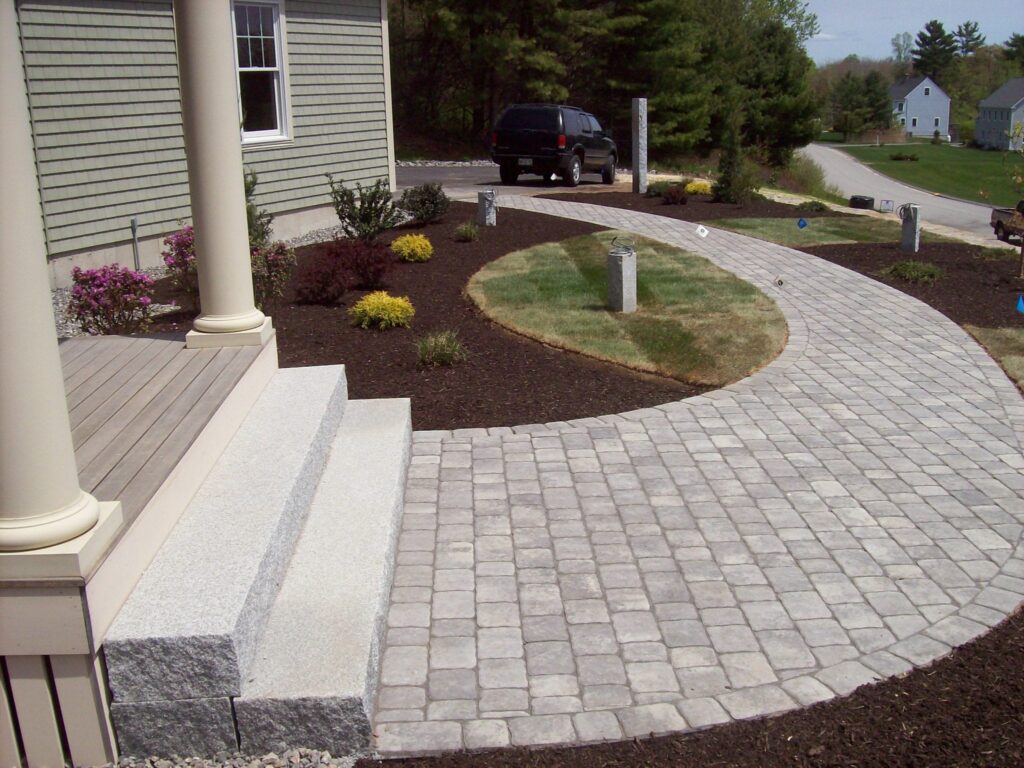
Older walkways are often only 36 inches wide, just enough for one person. Today, wider walkways are preferred to allow side-by-side walking and easy access for strollers or moving items.
If people walk single file or step onto the lawn, your walkway needs to be updated. Replacement lets you choose a wider, more functional design tailored to your lifestyle.
8. The Material Has Simply Reached the End of Its Life
Concrete typically lasts 25 to 30 years; asphalt, 20 to 30 years with good care. Inferior materials or installation, especially in Maine’s shifting climate, often lower these numbers.
Many of the homes we see have original walkways from the 70s to the 90s that are deteriorating. If yours has widespread flaking, scaling, discoloration, or soft spots, it’s likely near the end of its life. Constant repairs usually cost more than replacement.
What to Replace It With
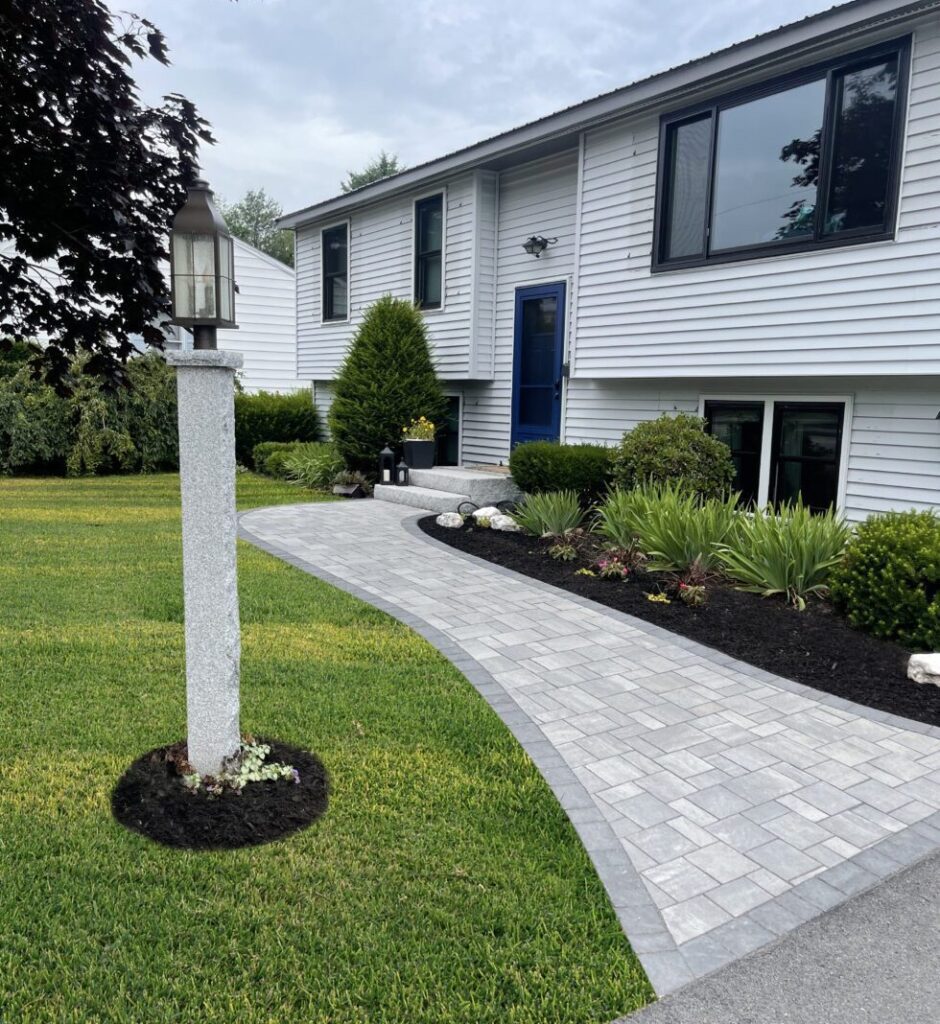
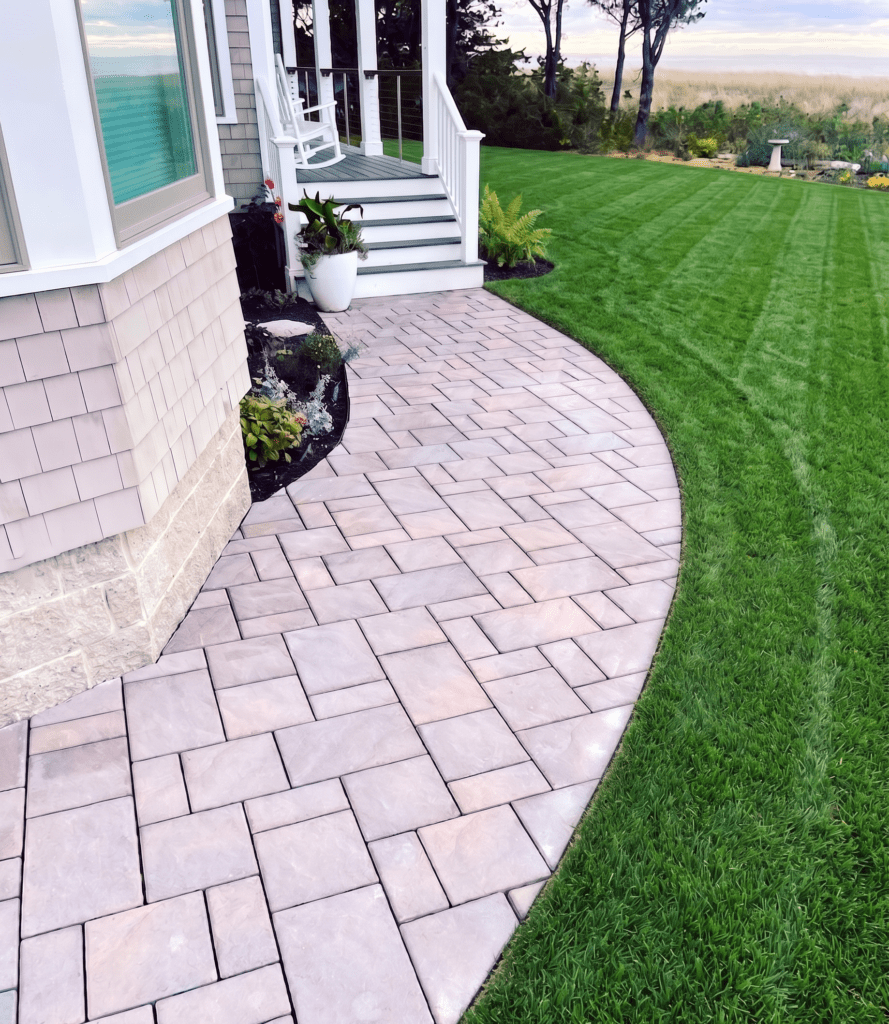
Concrete pavers and natural stone are consistently the best choices for Maine’s climate, and for good reason:
- Flexibility. Pavers are installed with jointing sand (material between the pavers) that naturally accommodates freeze-thaw movement, allowing the surface to move with the ground rather than cracking against it.
- Repairability. If a single paver ever shifts or breaks, it can be replaced individually — no jackhammering, no patching.
- Longevity. A properly installed paver walkway, with a well-excavated base (the compacted support layer underneath) and correct grading (ensuring proper slope for drainage), will easily last 30 or more years.
- Curb appeal. Natural stone and quality pavers simply look better, and hold their appearance far longer than poured concrete or asphalt.
The lifespan of a walkway depends more on its base than on its surface material.
Ready to evaluate your own walkway for these signs?
If your walkway is showing one or more of these signs, don’t wait for another Maine winter to make things worse. Schedule your personalized walkway assessment today with Stone Solutions Maine. We serve greater Portland and southern Maine, from Biddeford and Old Orchard Beach up through Falmouth, Cumberland, and beyond, and design walkways built to last.
Reach out now to start your walkway transformation. Contact us today.