
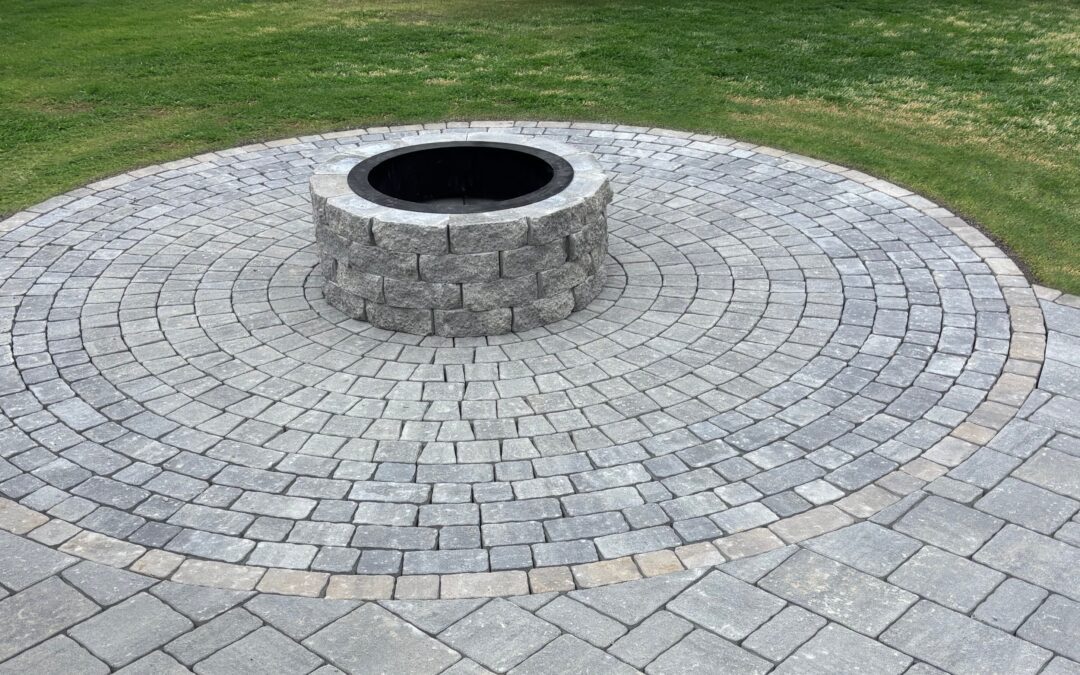
Every great patio project in southern Maine begins with a vision for outdoor living. In Durham, Maine, that vision sparked around a fire pit—and inspired a transformation: a beautiful paver patio seamlessly linking the existing deck to the landscape with a handicap-accessible ramp, a circular fire pit area at its center, and open lawn and woods stretching out beyond it.
Here’s how creativity, planning, and a love for Maine’s outdoors brought it all together.
The Goal: A Fire Pit Everyone Could Get To
The home already had a deck, but it was missing a ground-level gathering space everyone could enjoy. That’s where the dream took root: a new patio, fully accessible via a gently sloping ramp from the deck, with a fire pit at its heart—built so family and friends of all abilities could gather around the flames.
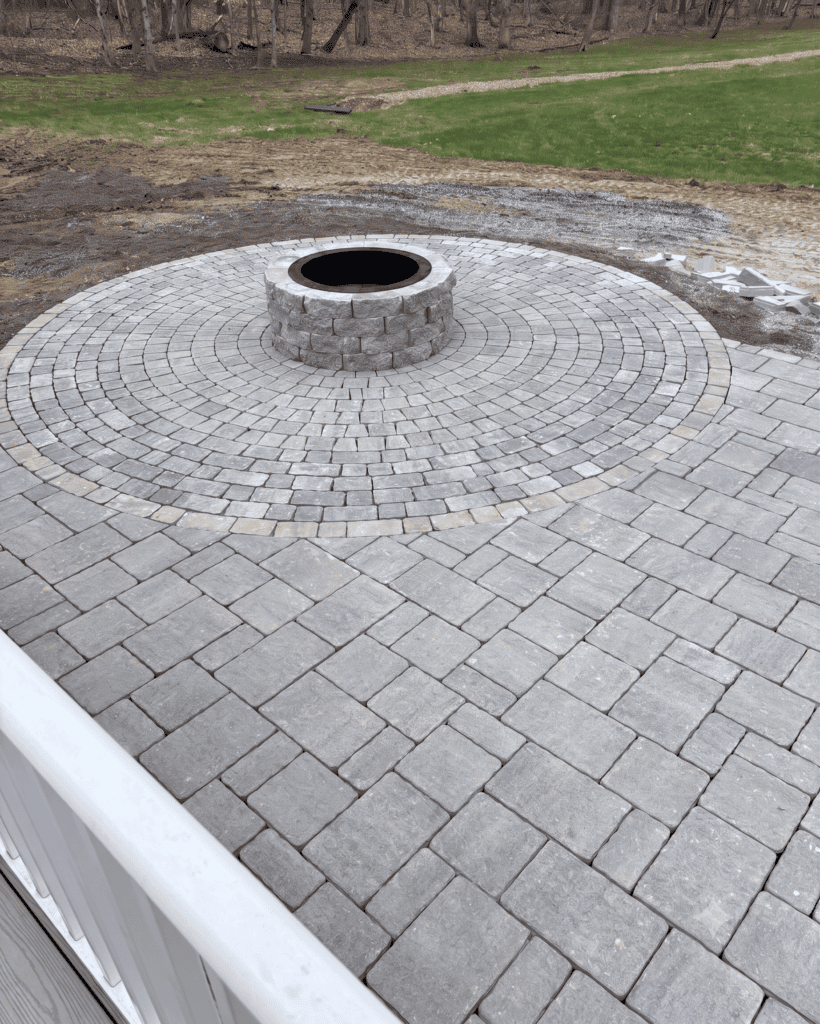
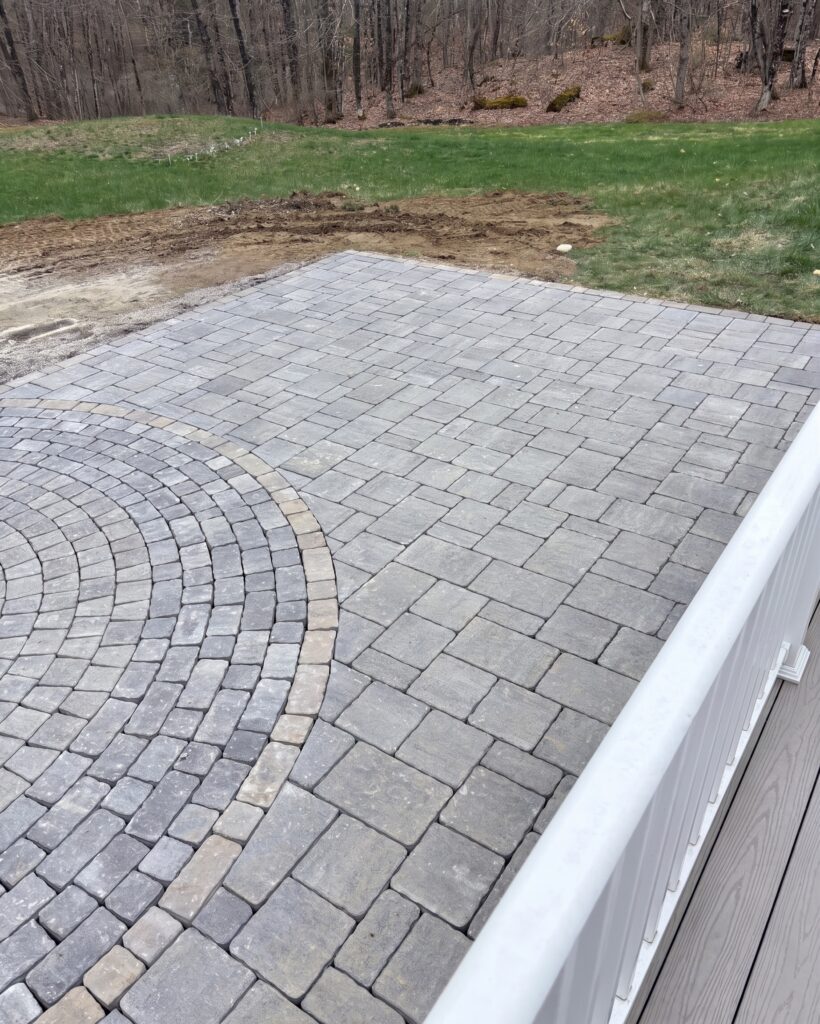

Accessibility drove every decision. With the patio set at ground level, there were no railings to climb, no steps to trip over—just a smooth, welcoming path from the ramp to the fire pit. Achieving that seamless flow on a sloped riverfront lot in Durham demanded thoughtful design and some creative problem-solving—more on that below.
The Materials: Genest Grand Katahdin in Granite Gray
This patio was built with Genest products throughout — a Maine-made brand, which matters on projects like this one: a Grand Katahdin body with a Small Katahdin circle pack at the fire pit, an Earth Blend border and accent to frame the field, and a simple Genest block fire pit to keep costs where the homeowners wanted them.
The granite gray wasn’t just chosen at random. This versatile shade complements the classic look of most Maine homes—a subtle way to let the patio shine as a feature rather than a distraction. For those craving a bolder statement, today’s paver options offer a whole world of colors and patterns to explore.
Sizing the Space: How Big Does a Fire Pit Patio Need to Be?
The square portion of this Durham patio runs 18 feet deep, with the circular fire pit section measuring about 14 to 16 feet across.
Those proportions land close to a sweet spot. A square in the 18×18 range, with a jet-out so the grill isn’t eating into the main space, leaves room for a dining table with chairs pulled out around it. It’s enough, without a lot of slack. Splitting the footprint the way this one is split helps because the fire pit lives in its own circle rather than in the middle of the dining area, the square stays dedicated to the table, and the grill stays out of the traffic path entirely.
But 18×18 isn’t a formula, and it isn’t where the conversation starts. Size recommendations should always be based on what the homeowner actually wants and needs from the space — what they hope to do out there, how they picture the setup, and how many people they envision on the patio at once. That last question does more work than any measurement. Dinner for six and a bonfire for fifteen are two different patios, and that gets settled long before anyone looks at pavers.
Reading the Yard: How the Layout Took Shape
Layout decisions are rarely made on a blank page. They come out of existing circumstances — steps, established trees and features, and anything functional protruding from the house.
Here, the fire pit became the heartbeat of the patio. The dining area and the ramp connection down from the deck both found their place in relation to that central gathering spot. And because the fire pit sits in its own defined circle rather than in the middle of everything, the square section stayed open and inviting—ready for lively meals and relaxed evenings by the fire.
The Circle Pack: More Than a Design Flourish
The circular paver pattern that surrounds the fire pit isn’t just for looks—it does real work. The “circle pack” gives this zone a distinct identity, defining the fire pit area and guiding guests to settle in, with room to expand as the party grows.
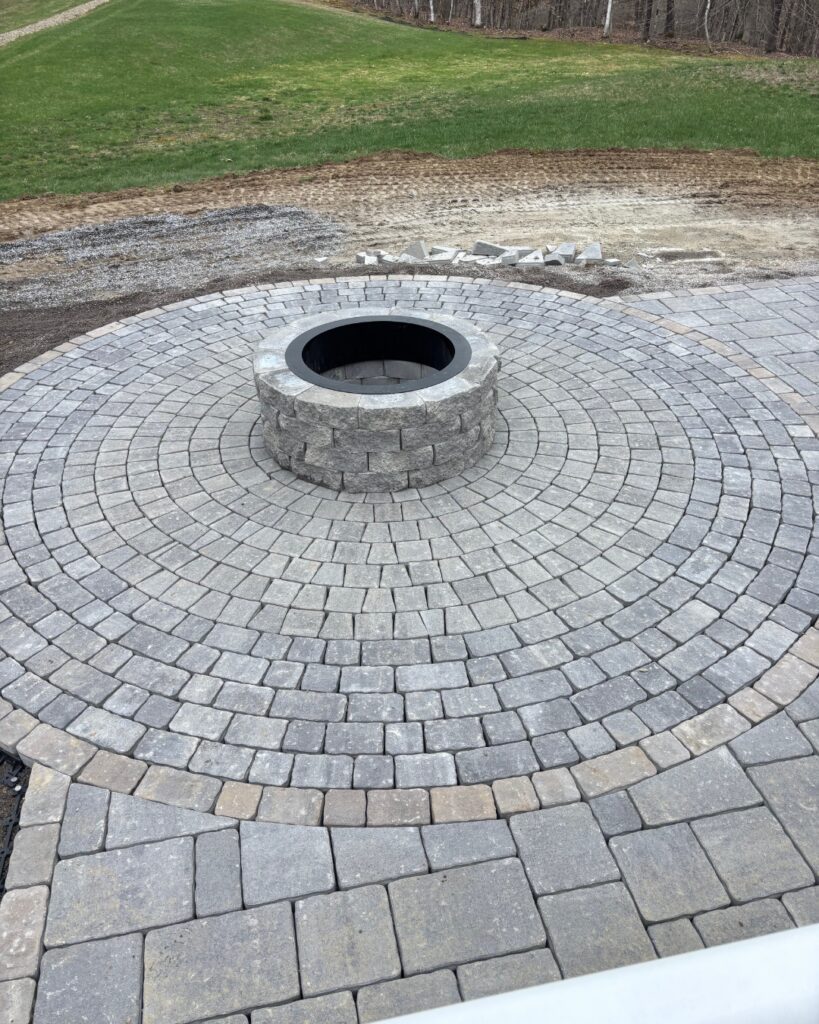
The circle isn’t just decoration—it marks a welcoming boundary around the fire pit, showing where seating belongs and giving the patio its structure without walls or steps. It’s accessibility by design: an inviting space, never a barrier.
The Materials: Genest Grand Katahdin in Granite Gray
This patio was built with Genest products throughout — a Maine-made brand, which matters on projects like this one: a Grand Katahdin body with a Small Katahdin circle pack at the fire pit, an Earth Blend border and accent to frame the field, and a simple Genest block fire pit to keep costs where the homeowners wanted them.
The granite gray wasn’t just chosen at random. This versatile shade complements the classic look of most Maine homes—a subtle way to let the patio shine as a feature rather than a distraction. For those craving a bolder statement, today’s paver options offer a whole world of colors and patterns to explore.
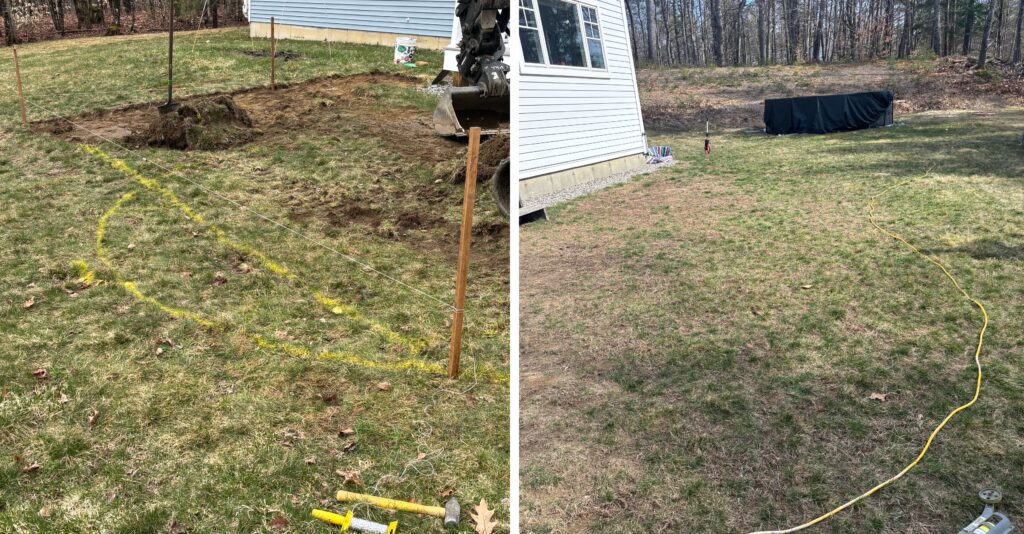
Site Prep: A Sloped Durham Lot in the Middle of Mud Season
This was no simple, flat backyard. The site was steeply sloped, demanding plenty of fill—thankfully repurposed from the gravel wheelchair path winding down to the river. And, with construction landing right in the heart of Maine’s infamous mud season, the yard took a beating just from moving equipment and materials—a rite of passage for rural projects in these parts.
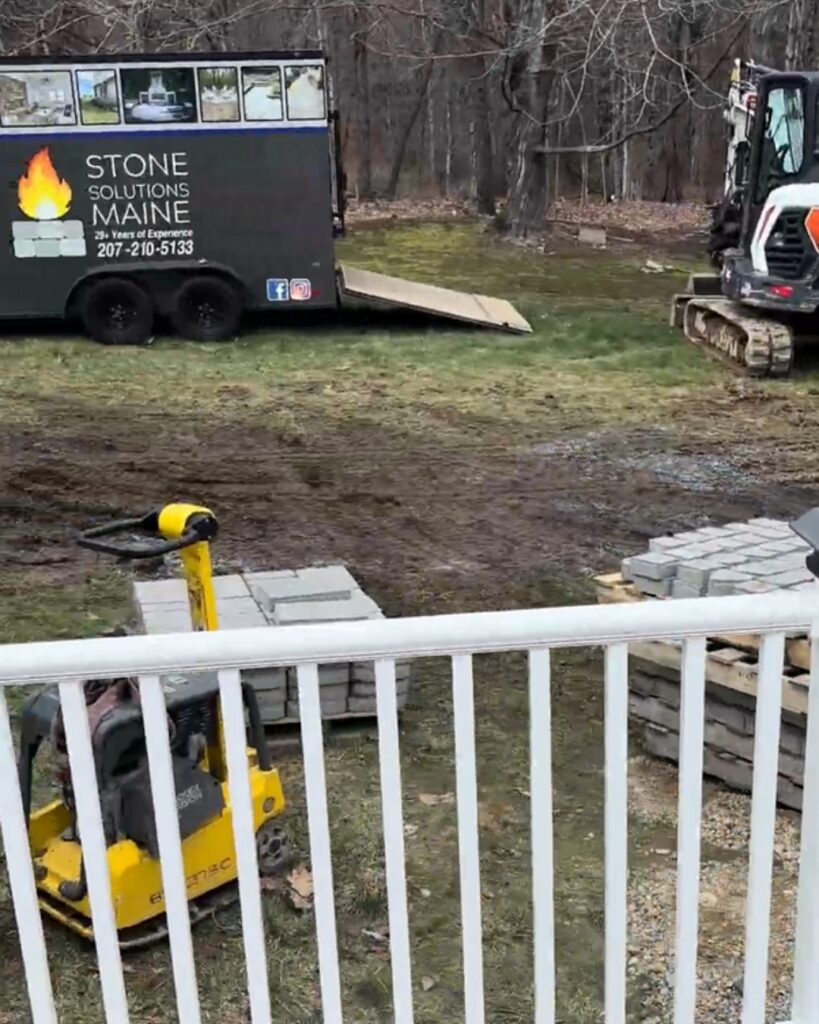
Extra stone and gravel created solid, stable access routes, then disappeared under fresh loam as the crew wrapped up. It’s the unseen, essential work—rarely photographed, but crucial—that filled much of the one to one-and-a-half week build.
What Homeowners Never See: The Base
What determines whether your patio still looks great after a decade isn’t the pavers you see on top—it’s what’s hidden underneath.
The biggest piece is always excavating deep enough for a proper base, and that varies yard to yard across Maine. Sandy or gravelly soil is less deep. Loam with roots goes deeper — and in Maine, that means removing all the roots. Clay goes deeper again, with stone compacted into the clay to mitigate it.
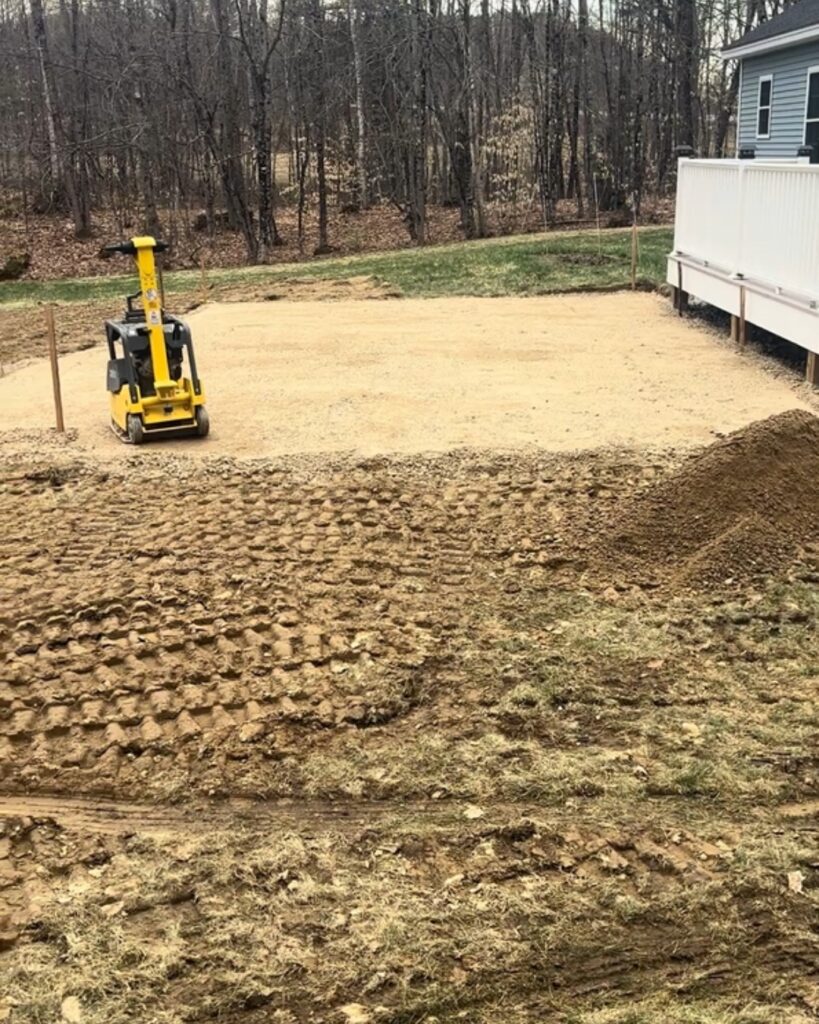
No matter the case, heavy compaction is number one. Once the depth and soil mitigation are complete, a road-grade structural fabric is installed before the base of the new infill material is placed.
A flawless surface over a rushed base? That shortcut will show up fast—especially after a few of Maine’s legendary freeze-thaw cycles. Here, the foundation is everything.
Deck or Patio? Start With This Question
For any southern Maine homeowner weighing the two, the first question is practical: Have you priced a deck?
From there, the trade-offs. Decks often require railings and can feel enclosed. And in Maine, depending on the deck and the setup, it’s one more area that has to be shoveled all winter. Then there’s upkeep. Non-composite decking needs ongoing maintenance. Composite avoids much of that, but it comes at a real premium.
Across Stone Solutions Maine’s own projects, decks tend to cost far more than patios—and among customers who’ve chosen a patio instead, cost has consistently been a driving factor. Add a straightforward preference for the look of stone and pavers, and for many Maine homeowners, the decision makes itself.
Keeping It Looking This Good: Maintenance Advice for Maine Patios
Maintenance advice doesn’t change much from project to project, because it doesn’t need to.
Blow it off. The golden rule: after mowing, grab the blower and clear the patio. Don’t leave grass clippings behind. The same goes for leaves and berries, especially before a rainstorm rolls in.
Why bother, you ask? Leave organic material sitting—especially when it’s wet—and you’re basically making paint. Those stains are stubborn and tough to remove, especially if they’re left to set in.
Stay ahead of weeds and ants. Weeds grow in from the top, not the bottom, which is exactly why keeping the patio blown off matters. Address any growth as soon as it’s noticed, before it gets anywhere close to invasive. Same with ants. They’ll destroy a patio over time by undermining it.
Seal it. Once new pavers have reached the right stage of cure, sealing helps a lot. Seal them, then repeat every few years after that. It mitigates staining because life happens, and no one can guard a patio 24/7.
Dreaming of a Paver Patio for Your Own Backyard?
Whether you’re dealing with a steep slope, an old deck, accessibility goals, or all of the above, the best patios start with your vision for how you’ll live outdoors. Stone Solutions Maine brings those visions to life—crafting patios, walkways, fire pit spaces, and hardscapes all across Durham, Scarborough, Cape Elizabeth, Pownal, and beyond in southern Maine.
Get in touch to talk through your project.